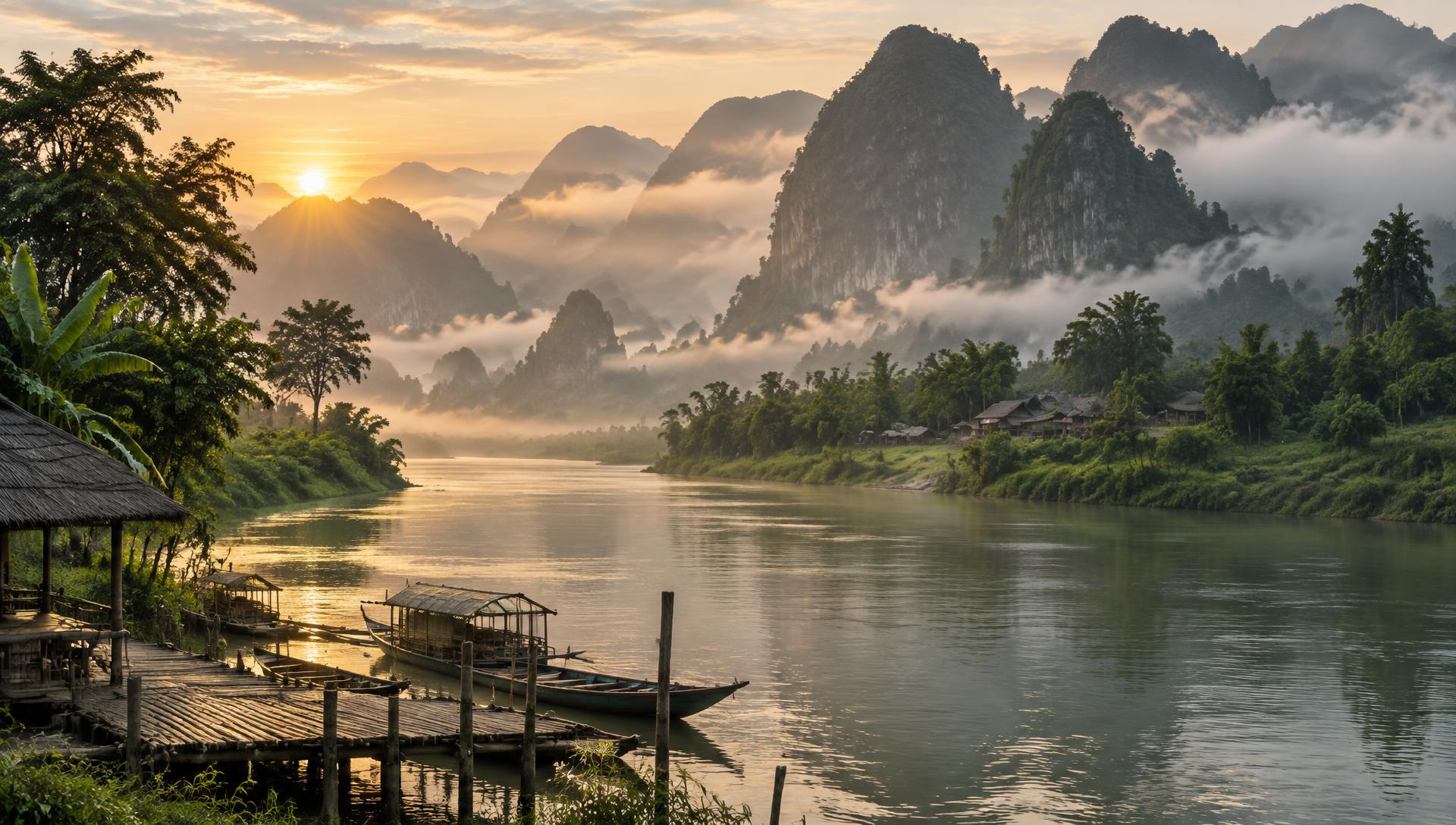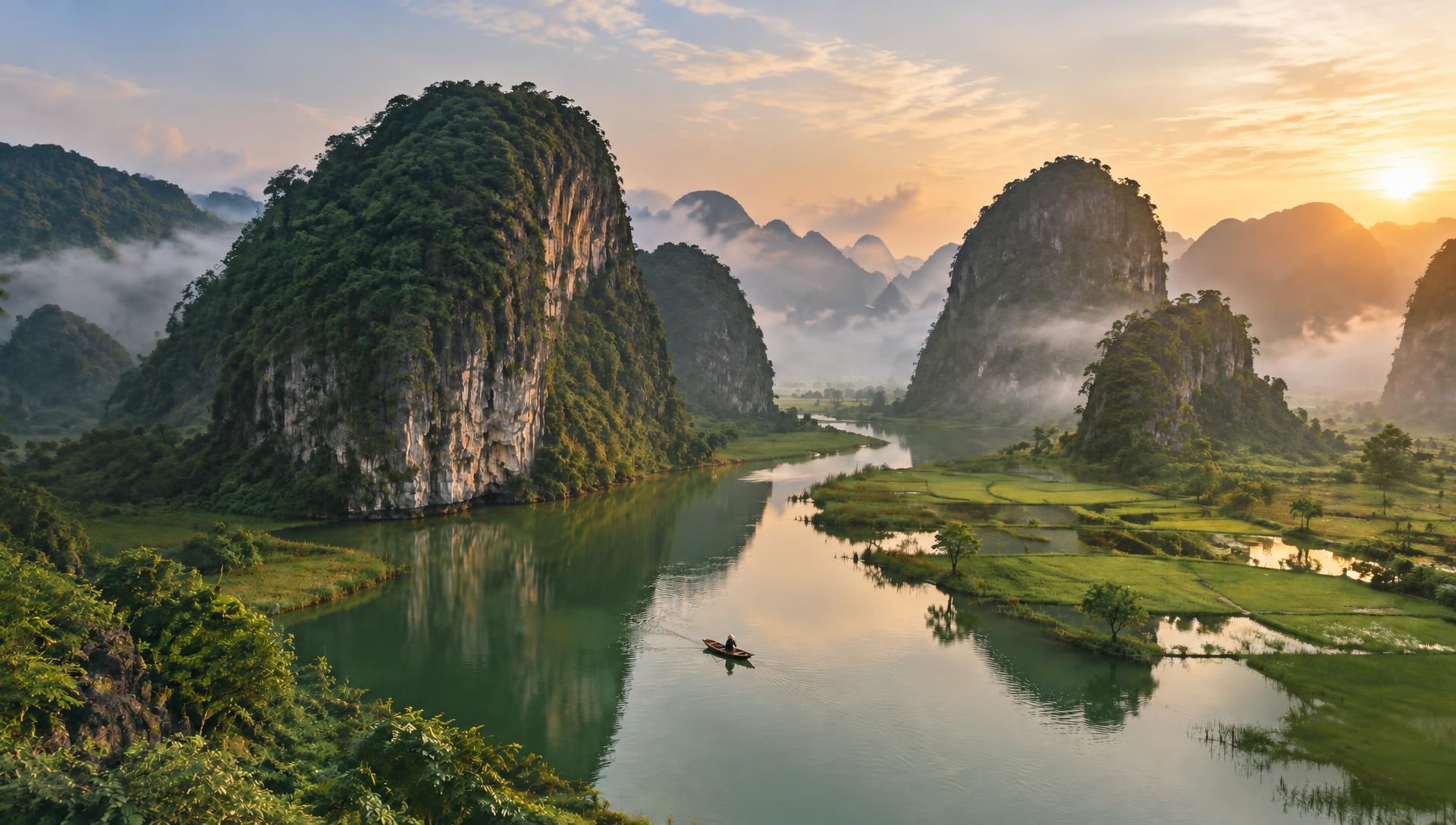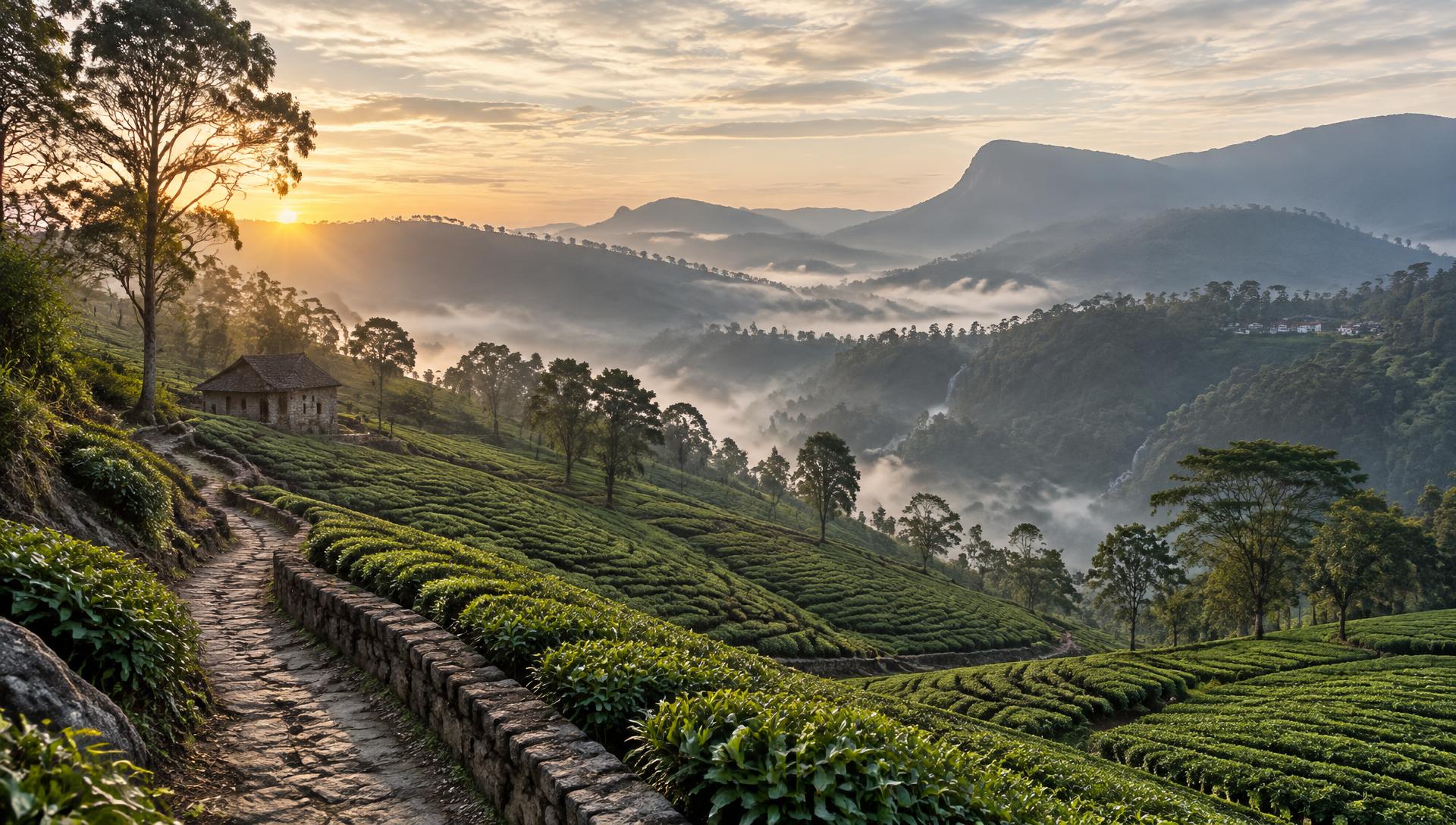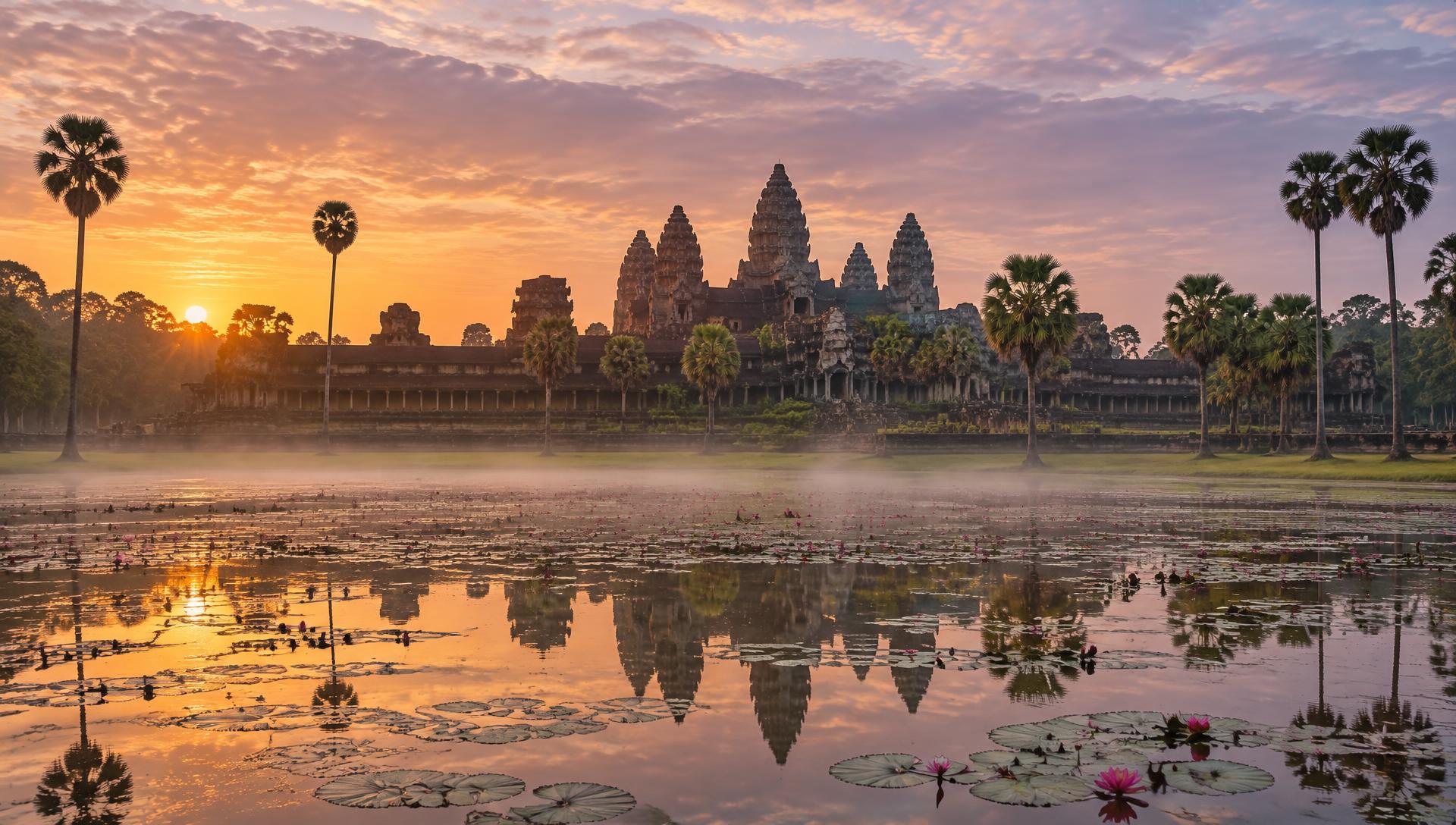
For six centuries between the ninth and fifteenth hundreds, the alluvial plain between the Kulen hills and the great lake of Tonlé Sap was the ceremonial heart of the Khmer world—a hydraulic city of sandstone towers, forest libraries, and vast reservoirs aligned with the stars.
Today, travellers arriving in Siem Reap, Cambodia often treat the archaeological park as an endurance test, racing between three monuments before noon and flying out the next morning. Yet Angkor was never merely a cluster of stone temples; it was a low-density tropical metropolis spanning more than four hundred square kilometres of forest, canals, and rice fields. Giving Siem Reap four or five unhurried days—using the flexible three-day Angkor Pass stretched across a full week—allows you to walk its shaded causeways when only cicadas and temple sweepers are awake. While November through February brings the coolest dry-season mornings at 21°C to 29°C, the green monsoon months from June to October reward patient visitors with brimming moats, moss-velvet carvings, and empty galleries.
Slowing down also reveals the living town of Krong Siem Reap to the south: a riverside settlement of shaded pagodas, silk weavers, ceramic studios, and contemporary Cambodian kitchens tucked along the tree-lined lanes of Wat Bo and Wat Damnak.
Beyond the one-day temple checklist
The scale of Angkor only makes sense when you understand water. Every major sanctuary in Siem Reap province—from the tenth-century pyramid of East Mebon to the moated enclosure of Angkor Wat—was engineered as part of a vast network of barays (man-made reservoirs) and channels that captured monsoon runoff from the sacred plateau of Phnom Kulen to irrigate three rice harvests a year.
When you view the monuments as part of a living forest and water landscape rather than isolated museum pieces, the way you plan your days changes completely. Instead of following the standard clockwise bus circuit at nine in the morning, you trace the outer dykes by bicycle or open remork (Cambodian tuk-tuk), pausing at small brick shrines where lotus buds are still laid at the feet of eighth-century lintels.
The reverse dawn strategy: East gates and forest sanctuaries
Every morning at five, thousands of visitors gather along the western causeway of Angkor Wat to photograph the classic sunrise silhouette. Less than a kilometre away on the opposite side of the moat, the wooded Eastern Gate stands almost completely silent. Walking in from the east at five-thirty, you pass through the outer gallery where dawn light filters sideways through stone balusters, illuminating the great Churning of the Ocean of Milk bas-relief before the main crowd has even crossed the western bridge.
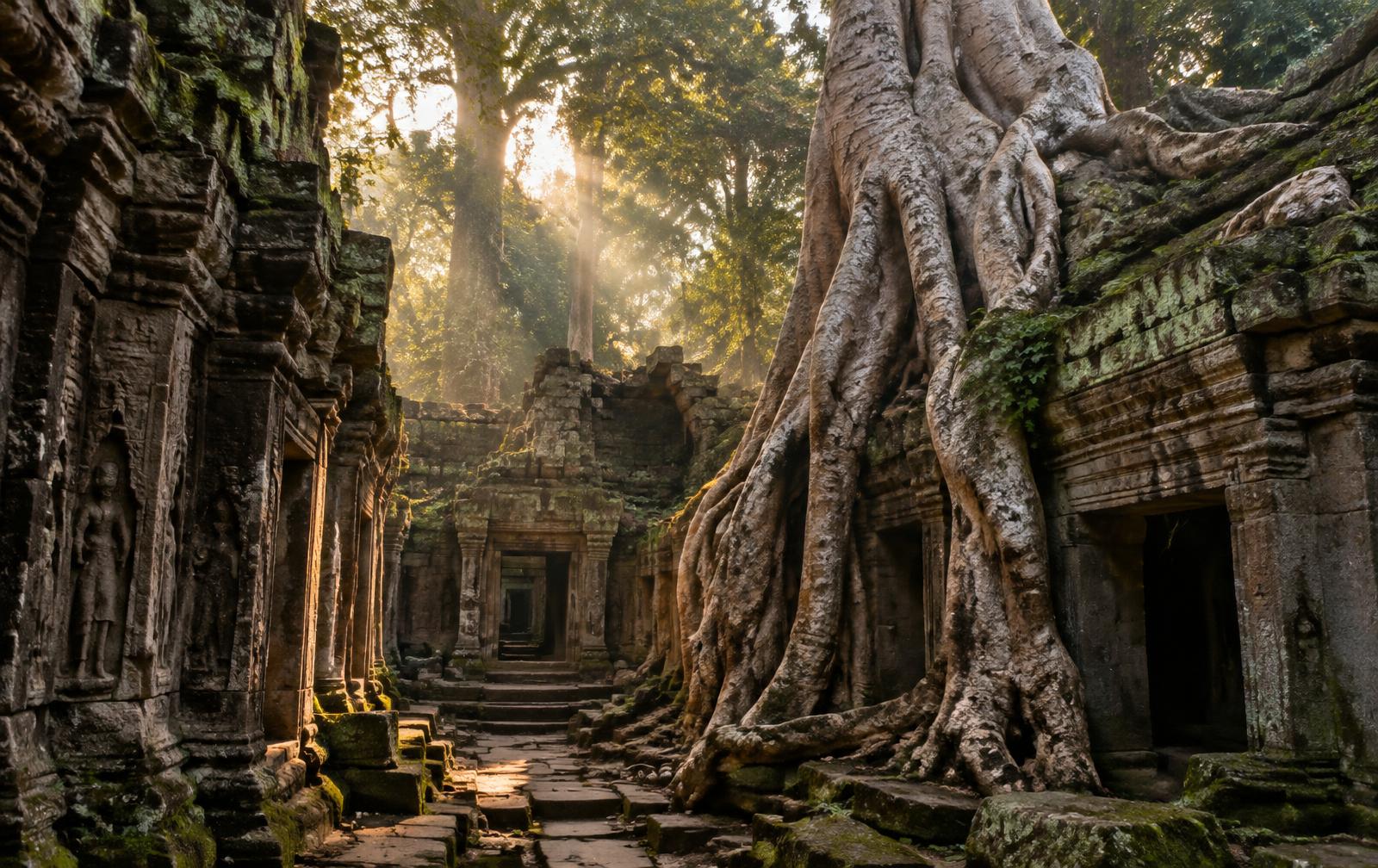
On your second morning, skip Angkor Wat entirely at dawn and go straight to Ta Prohm or Preah Khan as the gates open at five-thirty. For an hour and a half, you can stand alone beneath towering silver tetrameles trees whose roots pour like slow waterfalls over twelfth-century Buddhist cloisters. From there, follow the narrow forest track north to Ta Nei—a small, unrestored sandstone sanctuary deep in the bamboo canopy that tour buses cannot reach.
Late afternoon on the walls of Angkor Thom
Save the fortified royal city of Angkor Thom for the final two hours of the afternoon. Rather than stopping only at the smiling stone towers of the Bayon, walk the earthen ramparts from the quiet West Gate or Victory Gate toward the tiny corner shrine of Prasat Chrung, where the moat catches the last amber light through frangipani trees.
“Angkor does not belong to the midday sun; it belongs to the first hour after dawn and the last hour before dusk, when stone and forest share the same shadow.”
Pink sandstone and lost capitals: Banteay Srei, Beng Mealea, and Koh Ker
Some of the most moving Cambodia tours lead thirty to ninety minutes beyond the main park ring. Thirty-seven kilometres north of Siem Reap city, near the foothills of Phnom Kulen, sits Banteay Srei. Built in 967 AD not by a king but by a royal counsellor, this miniature Shiva temple is carved from hard, rose-pink sandstone that holds detail like chased bronze. Arrive before seven in the morning, when the pink stone glows warm in low sunlight.
Continue east through palm-sugar villages to Beng Mealea, a vast twelfth-century temple left largely as French naturalists found it—its vaulted libraries and naga balustrades cushioned in emerald moss inside a quiet moat. A further hour northeast lies Koh Ker, the brief tenth-century capital of Jayavarman IV and Cambodia’s newest UNESCO World Heritage site, where the seven-tiered pyramid of Prasat Thom rises above dry dipterocarp forest.
Field ledger: Five unhurried Angkor & Siem Reap circuits
Structure a four- or five-day stay around these five low-crowd windows to experience both the great monuments and the surrounding countryside without fatigue:
| Circuit & Focus | Key Sanctuaries & Places | Optimal Timing Window | Transport Style | Why This Rhythm Works |
|---|---|---|---|---|
| I. The Quiet East Entry | Angkor Wat East Gate, Bas-Relief Galleries & Phnom Bakheng South Path | 5:30 AM – 8:30 AM (or 1:00 PM – 4:30 PM) | Open remork & on foot | Enters opposite the sunrise crowd; illuminates the eastern carvings in soft morning light |
| II. The Forest Monasteries | Ta Prohm, Ta Nei Hidden Shrine, Banteay Kdei & Preah Khan | 5:30 AM – 9:30 AM | Remork + shaded jungle trails | Experiences the tree-embraced cloisters of Ta Prohm in total silence before 7:30 AM |
| III. The Walled City at Dusk | Bayon, Baphuon, Terrace of the Leper King & Prasat Chrung Ramparts | 3:00 PM – 5:30 PM | Bicycle or electric scooter along outer walls | Catches warm angled light across the 216 stone faces of the Bayon after tour groups depart |
| IV. The Northern Rose & Jungle | Banteay Srei, Kbal Spean River Carvings & Beng Mealea (or Koh Ker) | 6:30 AM – 1:30 PM | Private car through rural Kulen foothills | Reaches Banteay Srei’s pink sandstone before the heat and pairs it with unrestored Beng Mealea |
| V. The Great Lake & Craft Lanes | Kampong Khleang Stilted Village, Angkor National Museum & Wat Bo Studios | Full rest day between temple days (3:00 PM lake boat) | Country road transfer & wooden river sampan | Breaks up stone temple days with living water culture on Tonlé Sap and local artisan workshops |
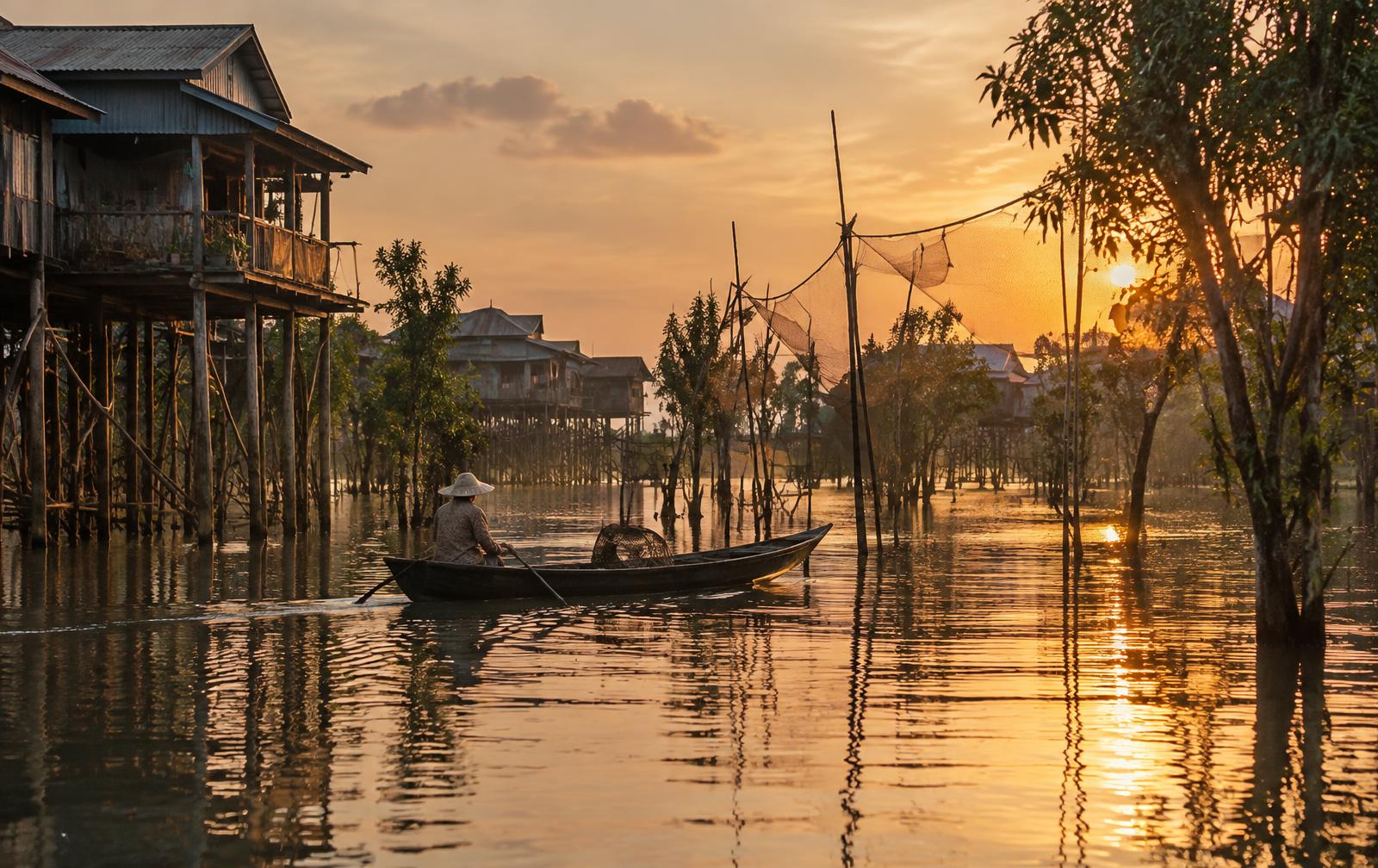
The breathing lake: Kampong Khleang and the Tonlé Sap floodplain
South of the temples lies the natural engine that made the Khmer Empire possible: Tonlé Sap, Southeast Asia’s largest freshwater lake. Every June, as snowmelt and monsoon rains swell the Mekong River, the Tonlé Sap River reverses its direction of flow, filling the lake basin until it expands more than fourfold and floods the surrounding gallery forests where fish spawn by the millions.
To witness this amphibious world respectfully, skip the busy ticketed docks directly south of town and travel fifty kilometres east through rice paddies to Kampong Khleang. In the dry months from February to May, you walk beneath houses perched on stilts ten metres high like wooden cathedrals; between August and January, water rises to the floorboards and wooden boats glide directly down the village main street.
Life in Krong Siem Reap: Craft studios, seasons, and practical notes
Keep your afternoons slow inside Krong Siem Reap. Across the river from the Old Market, the leafy quarters of Wat Bo, Wat Damnak, and Kandal Village have quietly evolved into one of Southeast Asia’s most thoughtful creative neighbourhoods. Spend the warm hours between noon and three visiting silk-weaving ateliers reviving natural vegetal dyes, stone and bronze conservation workshops, or shaded garden cafés serving fish amok steamed in banana leaves and green mango salads scented with smoked river fish.
Whether you arrive in the crisp, dry air of January or the lush, rain-washed quiet of September, let the heat dictate a gentler schedule: four morning hours among the stones, three midday hours beneath ceiling fans and banyan shade, and dusk beside the water.
Practical Notes
Questions travellers often ask
How many days should you spend in Siem Reap, Cambodia?
Give Siem Reap at least four to five full days. Purchasing the three-day Angkor Pass (which is valid for any three days within a ten-day window) allows you to alternate temple mornings with rest afternoons, dedicating one day to the central Angkor Wat and Angkor Thom complex, a second to the forest temples of Preah Khan and Ta Nei, a third to Banteay Srei and Beng Mealea, and a separate day in between for the stilted villages of Tonlé Sap Lake.
When is the best time of year for Cambodia holidays in Siem Reap?
The dry northeast monsoon from November through February offers the coolest, most comfortable weather in Siem Reap, with crisp 21°C mornings and daytime highs around 29°C to 31°C. However, seasoned slow travellers also prize the green season from late May through October, when passing afternoon showers fill the ancient moats to capacity, turn the sandstone carvings emerald with moss, and reduce visitor numbers by more than half.
How can you visit Angkor Wat and Ta Prohm without crowds?
Instead of joining the main crowd at the western reflection pond of Angkor Wat at 5:00 AM, enter Angkor Wat through its quiet, tree-shaded Eastern Gate at 5:30 AM or head straight to Ta Prohm, Preah Khan, or the hidden jungle shrine of Ta Nei when the park opens. Equally rewarding is visiting Angkor Wat between 12:30 PM and 2:30 PM, when tour buses return to town for lunch, or late in the afternoon as golden light illuminates the western bas-relief galleries.
Which floating or stilted village on Tonlé Sap Lake is most authentic?
Avoid the heavily commercialized boat docks at Chong Kneas near town and drive fifty kilometres east to Kampong Khleang, or visit Kampong Phluk during the high-water months (August to January). Kampong Khleang is home to a permanent community of ten thousand residents living in towering ten-metre timber stilt houses and floating wooden homes that move with the seasonal pulse of the lake.
What are the current Angkor Pass prices and Cambodia visa requirements?
The official Angkor Pass costs $37 USD for a 1-day pass, $62 USD for a 3-day pass (usable across 10 days), and $72 USD for a 7-day pass (usable across 1 month), and includes entry to Beng Mealea and Phnom Krom. Most international travellers can obtain a 30-day Cambodia e-Visa online prior to travel ($30 USD) or a Visa on Arrival at Siem Reap–Angkor International Airport (SAI), paired with Cambodia's mandatory electronic arrival card.
How far is the new Siem Reap airport from town?
Siem Reap–Angkor International Airport (SAI) is located approximately 45 kilometres east of Krong Siem Reap in Soutr Nikom district. The drive into the leafy riverbank quarters of Wat Bo and the Old French Quarter takes 45 to 55 minutes by private car or official airport shuttle along a dedicated highway.
Share this story