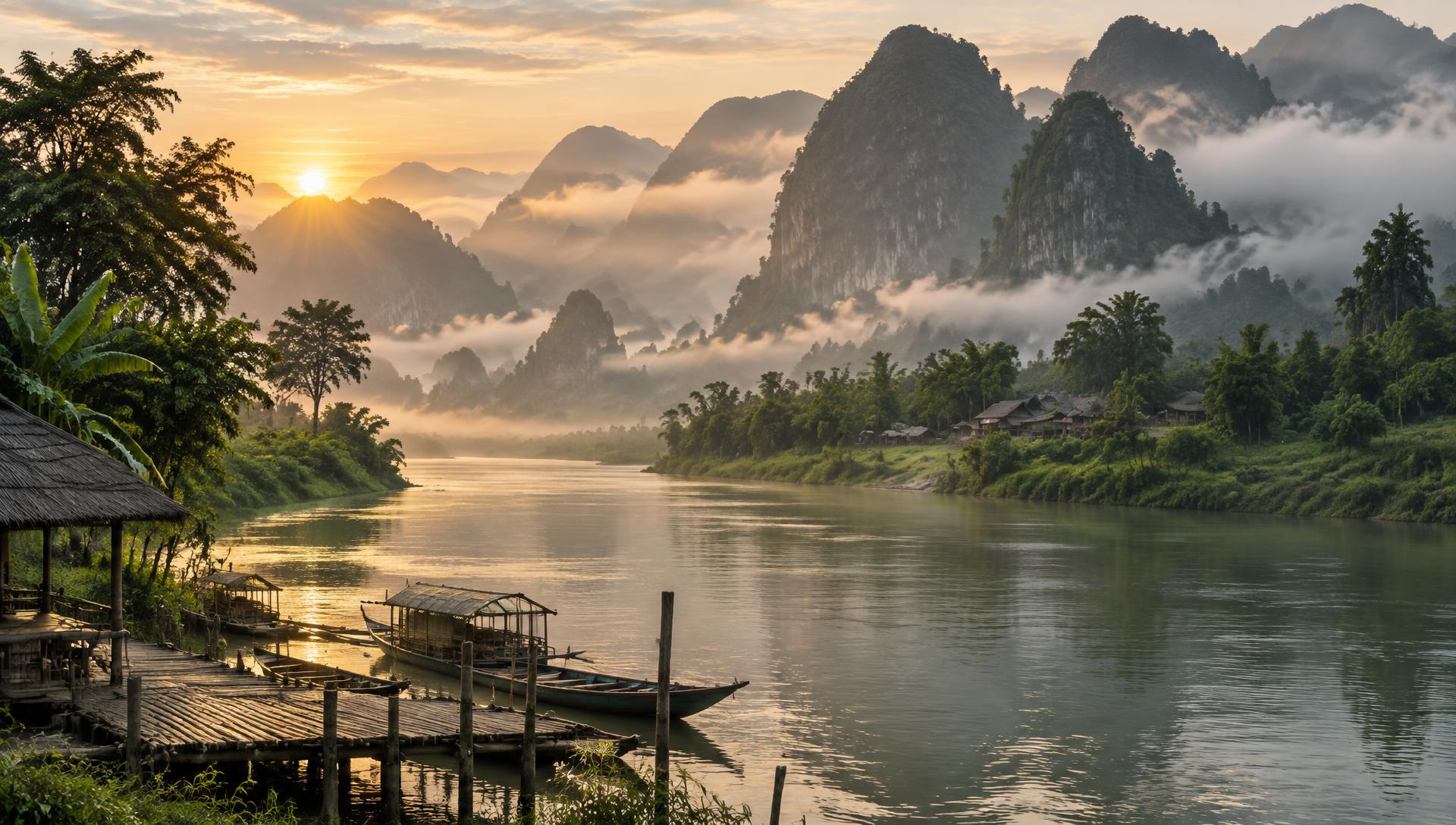
Stretching more than a thousand miles from the mist-wrapped borderlands of Yunnan to the warm mangrove channels of the Gulf of Thailand, Vietnam is less a single destination than three distinct worlds stitched together by mountains and sea.
When weighing the best places to visit in Vietnam, the secret is resisting the urge to follow the standard tourist highway at peak midday hours. Almost every famous landmark in the country has a quieter geographical twin nearby: Lan Ha Bay and Bai Tu Long Bay offer the same emerald limestone towers as central Ha Long Bay without the tour boat congestion; the river valleys of Ninh Binh and Pu Luong offer serene alternatives to busy hill stations; and the imperial garden houses of Hue balance the lantern-lit energy of Hoi An. For a north-to-south journey, February through April and October through November bring the most harmonious weather across all three regions.
Approached with patience, the country unfolds as a study in contrasts—from cool northern mornings spent drinking egg coffee in French-colonial courtyards to warm southern dusks drifting down palm-shaded delta canals.
A country shaped by three latitudes
Few countries change character as dramatically with latitude as Vietnam. The northern third—anchored by Hanoi, the Red River Delta, and the high mountain arc along the Chinese frontier—experiences four genuine seasons, including cool, misty winters between December and February when temperatures in the hills dip to 12°C and woodsmoke hangs over terraced valleys.
Five hundred miles south, beyond the cloud barrier of the Hai Van Pass, central Vietnam follows its own coastal calendar, enjoying dry, sunlit months from February right through August. Further south still, around Ho Chi Minh City, the Mekong Delta, and Phu Quoc Island, the climate turns purely equatorial, with warm 30°C days year-round and a crisp dry season stretching from late November to April.
The North: Hanoi, Ninh Binh, and the high passes of Ha Giang
Every northern journey begins in Hanoi, a capital that rewards early risers. At six in the morning around Hoan Kiem Lake and the French Quarter, before the motorbike tide swells, elders practise tai chi beneath century-old banyan trees and street vendors ladle clear beef pho over porcelain bowls on low stools.
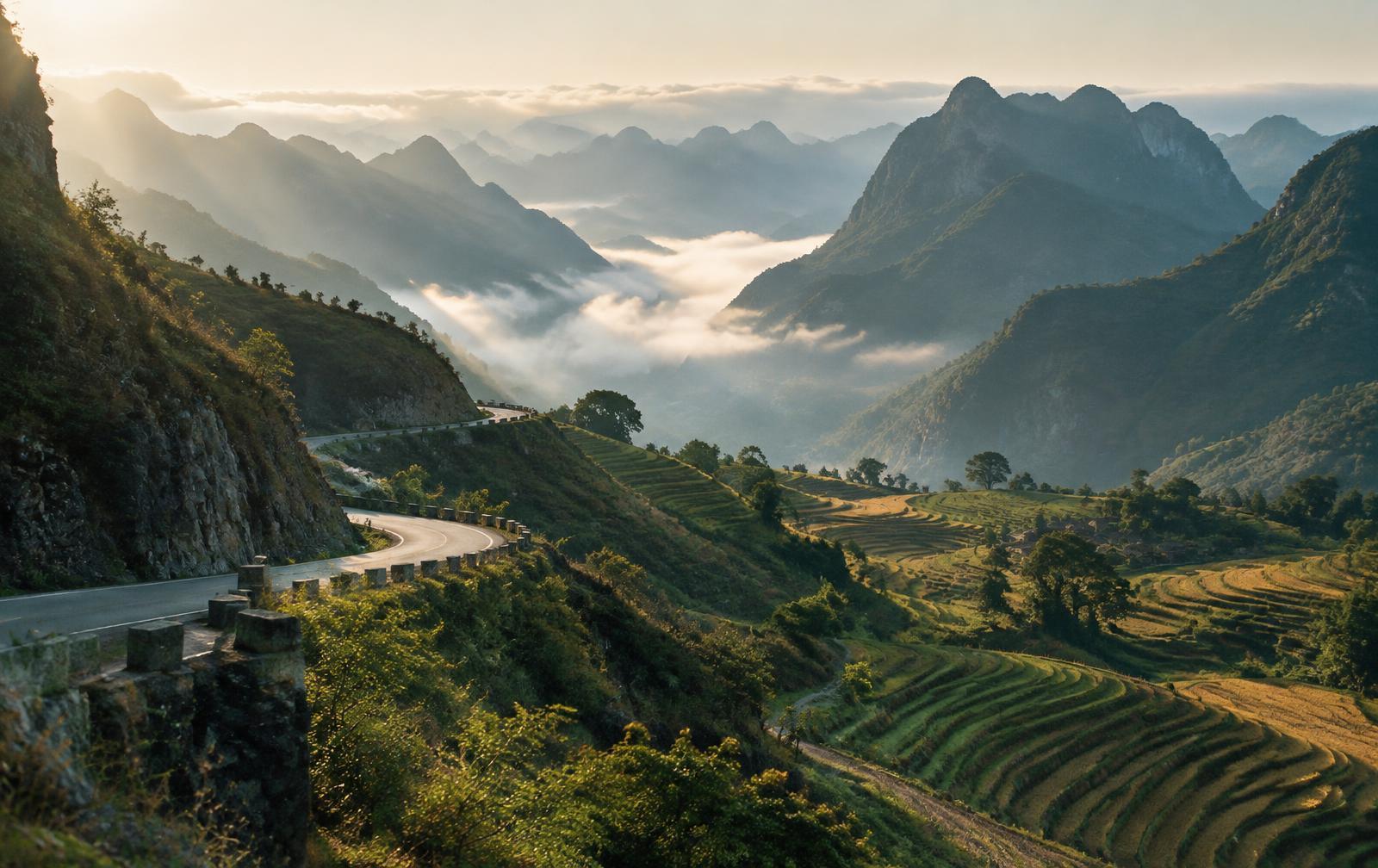
From Hanoi, two inland landscapes stand out among Vietnam travel locations. Ninety minutes south lies Ninh Binh, where the Ngo Dong and Sao Khe rivers wind through vertical limestone karsts rising straight out of emerald rice paddies. Stay in a quiet valley lodge near Trang An or Van Long Nature Reserve, and take a wooden rowboat at seven in the morning when only kingfishers and lotus gatherers are on the water. If you have four extra days, head north into the Dong Van Karst Plateau of Ha Giang, where ribbon-like mountain roads trace canyon rims above the Nho Que River.
Choosing Lan Ha and Bai Tu Long over central Ha Long Bay
The drowned limestone archipelago of the Gulf of Tonkin remains one of Asia’s essential seascapes, yet many travellers leave disappointed after booking a rushed day cruise through the crowded central port of Ha Long Bay. The geology does not stop at the administrative boundary.
Immediately south of Ha Long lies Lan Ha Bay, framing the forested shores of Cat Ba Island, while to the northeast stretches Bai Tu Long Bay. Boarding a small, ten-cabin wooden vessel for two nights in either of these neighbouring bays transforms the experience: you wake to absolute silence in mist-ringed lagoons, kayak into hidden tidal caves, and watch fishing villages light their lamps at dusk without another cruise ship in sight.
“In Vietnam, twenty kilometres of back road or a second night on the water is often all that separates spectacle from solitude.”
Regional ledger: Iconic stops and their quieter counterparts
Use this geographic ledger to pair Vietnam’s classic highlights with the slower, less-travelled landscapes right next door:
| Region & Hub | Signature Highlight | Quieter Slow-Travel Alternative | Ideal Stay | Best Months to Visit |
|---|---|---|---|---|
| Northern Karst & Coast | Ha Long Bay & Hanoi Old Quarter | Lan Ha Bay or Bai Tu Long Bay (2-night boat) & Hanoi French Quarter | 4 – 5 nights | October – December & March – May (Clear skies, 20°C–27°C) |
| Northern Highlands | Sapa Valley Terraces | Ha Giang Karst Loop, Pu Luong Nature Reserve & Van Long (Ninh Binh) | 3 – 5 nights | September – November (Golden harvest) & March – April |
| Central Heritage Coast | Hoi An Ancient Town & Da Nang | Hue Imperial Lagoons (Tam Giang), An Bang Outskirts & Quy Nhon Bays | 4 – 5 nights | February – August (Dry coastal sunshine, 25°C–31°C) |
| Southern Waterways | Ho Chi Minh City & My Tho Day Trip | Ben Tre Coconut Canals, Chau Doc River Border & Can Tho Floating Dawn | 3 – 4 nights | December – April (Dry season, low humidity, 28°C–32°C) |
| Southern Islands | Phu Quoc Island South Coast | Con Dao Archipelago National Park & Phu Quoc Northern Forest Coves | 4 nights | November – April (Glass-calm seas; March – July for Con Dao) |

The Central Coast: Imperial Hue, the Hai Van Pass, and Hoi An
Midway down the spine of the country, the Perfume River flows through Hue, the seat of the Nguyen Dynasty emperors until 1945. Give Hue more than a passing afternoon. Beyond the moated Imperial Citadel, the wooded hills upriver shelter sprawling royal mausoleums—such as the pine-shaded pavilions of Minh Mang and Tu Duc—designed as poetic landscapes linking architecture, lotus ponds, and forest.
From Hue, travel south over the cloud-draped granite shoulder of the Hai Van Pass into Hoi An. Because Hoi An’s car-free Ancient Town draws large crowds between ten in the morning and eight at night, base yourself a ten-minute bicycle ride away among the vegetable gardens of Tra Que or the rice fields toward Cua Dai, and walk the ochre merchant lanes at dawn when only the market boats are unloading along the riverfront.
The South: Saigon, Mekong canals, Con Dao, and Phu Quoc Island
In the south, the energy accelerates in Ho Chi Minh City before softening completely once you reach the nine distributaries of the Mekong Delta. Skip the rushed highway day trips from Saigon and spend two nights deeper in the delta around Ben Tre or Can Tho, where narrow sampans slip beneath water-coconut fronds and riverside orchards harvest pomelo, mangosteen, and rambutan.
To end a Vietnam journey beside the sea between November and April, two island choices reward slow travellers. Off the southwest coast near Cambodia, Phu Quoc Island pairs calm, gin-clear dry-season water with quiet luxury sanctuaries tucked along its northern national park headlands. Off the southeast coast, the sixteen islands of Con Dao remain wonderfully hushed—a sanctuary of empty beaches, coral reefs where green turtles nest in summer, and breezes blowing straight across the South China Sea.
Practical Notes
Questions travellers often ask
What are the best places to visit in Vietnam for a first-time slow traveller?
For a balanced first journey that avoids overcrowded day-trip hubs, pair the tree-lined boulevards of Hanoi with the river valleys of Ninh Binh, sail an overnight wooden junk through Lan Ha Bay or Bai Tu Long Bay, take the coastal train over the Hai Van Pass to Imperial Hue and Hoi An, and finish in the southern waterways of the Mekong Delta (Ben Tre or Can Tho) or the island coves of Con Dao and northern Phu Quoc.
Which is better to visit: Ha Long Bay, Lan Ha Bay, or Bai Tu Long Bay?
All three bays share the exact same sunken limestone karst geology in the Gulf of Tonkin, but Lan Ha Bay (off Cat Ba Island to the south) and Bai Tu Long Bay (to the northeast) receive a fraction of the boat traffic seen in central Ha Long Bay. Choosing a two-night boutique vessel in Lan Ha or Bai Tu Long allows you to kayak through silent lagoons and anchor in calm coves with very few neighbouring boats.
Should I choose Sapa, Pu Luong, or Ha Giang for northern mountain scenery?
While Sapa offers convenient rail access and high-end mountain lodges, its main town has grown heavily commercialized. Travellers seeking quieter highland immersion often prefer the dramatic limestone passes of the Ha Giang Loop along the Chinese border for raw geological scale, or the lower, terraced bamboo valleys of Pu Luong Nature Reserve four hours southwest of Hanoi for gentle village walking.
When is the best time of year for holidays to Vietnam from north to south?
Because Vietnam stretches 1,650 kilometres from north to south across three climate zones, spring (February through April) and autumn (October and November) offer the most pleasant weather for a full-country route. Spring brings mild temperatures across the north (20°C to 26°C) and dry sunshine across the central coast and southern islands, while autumn delivers golden harvest skies in the northern highlands.
Is Phu Quoc Island or Con Dao better for a coastal stay in southern Vietnam?
Phu Quoc Island in the Gulf of Thailand offers calm, warm waters from November to April, direct flights, and secluded luxury resorts tucked into the forested northern beaches around Ganh Dau and Ong Lang. Con Dao, a sixteen-island archipelago off the southeastern coast, is far more remote—ideal for travellers seeking empty beaches, protected marine national park reefs, and deep historical resonance.
How many days do you need to see Vietnam properly without rushing?
Two weeks (14 to 16 days) allows you to cover two regions well—typically the North (Hanoi, Ninh Binh, and Lan Ha Bay) paired with the Central Coast (Hue and Hoi An). To include the northern mountain passes of Ha Giang alongside the southern Mekong Delta and an island stay on Phu Quoc or Con Dao, plan for twenty-one to twenty-five days.
Share this story