Before the scooters begin their climb and the first cafés lift their shutters, Bali belongs to water.
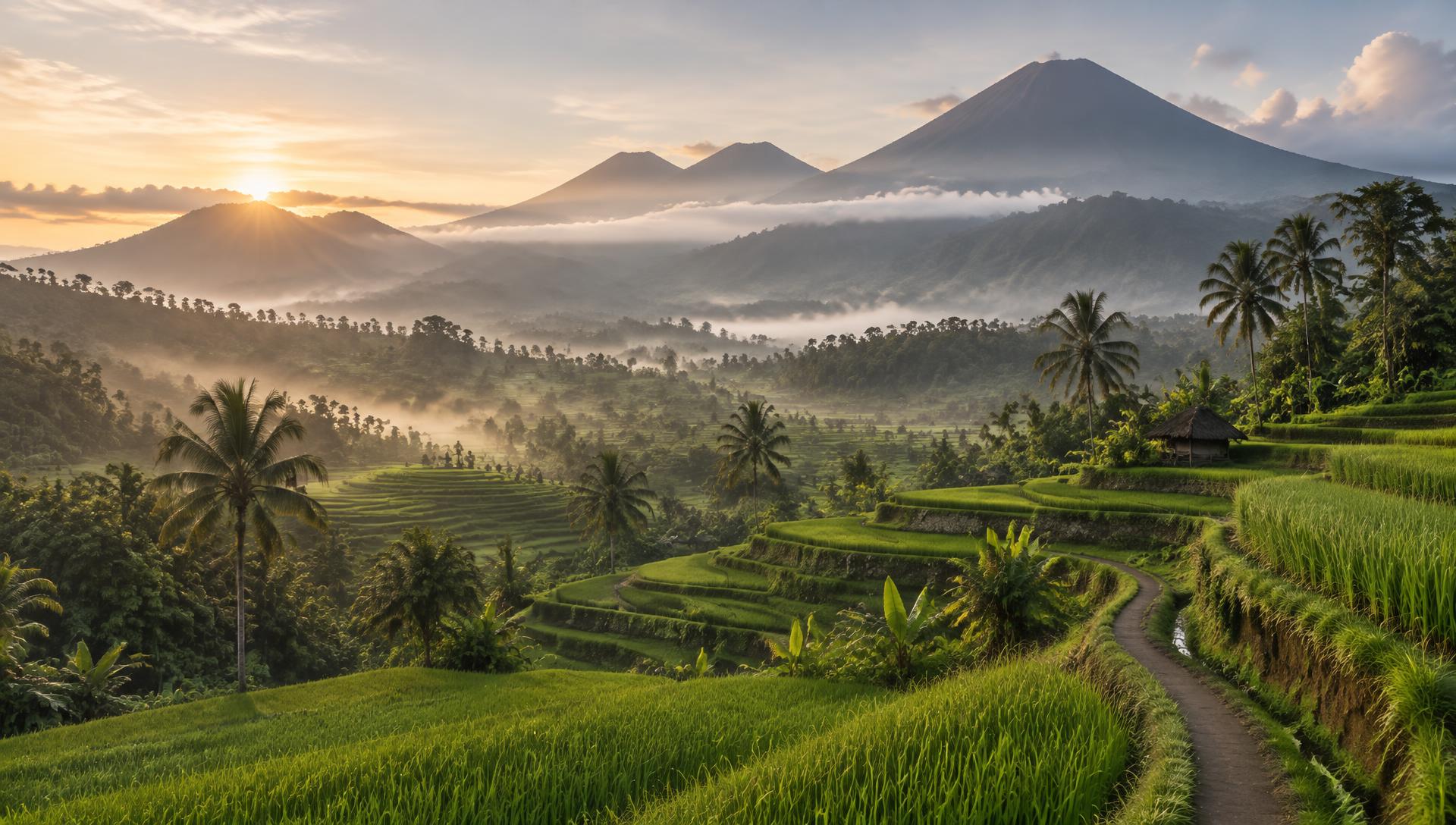
It moves through the subak channels cut into the hillsides, flashes silver between new rice shoots, and gathers beneath shrines wrapped in black-and-white cloth. At dawn in Sidemen, the valley seems to breathe with it. Mist rises from the fields while Mount Agung holds the horizon in a quiet, blue silhouette.
This is not the Bali of beach clubs and hurried checklists. It is an older, more intimate island—one best understood by giving it time, leaving the main road, and allowing the ordinary rituals of the day to become the journey itself.
Eastward, into the quiet
The road from Ubud to Sidemen narrows as it travels east. Stone walls give way to terraces; traffic thins; the air grows cooler. Small processions appear without announcement: women balancing towers of fruit, men in white udeng headcloths, children carrying umbrellas toward a village temple.
There is no need to arrive with an agenda. Walk early, before the heat gathers. A local guide can lead you along the narrow irrigation paths, explaining how the centuries-old subak system distributes not only water, but responsibility. Every field is part of a larger agreement between farmers, temples, and the landscape.

A landscape shaped by devotion
In Bali, the sacred is not kept apart from daily life. Offerings of palm leaf, rice, and flowers appear on doorsteps and dashboards. Incense drifts from family compounds. Even the geometry of the rice terraces reflects a spiritual order: water travels from temple to field, linking abundance with gratitude.
“The island reveals itself slowly—not through spectacle, but through the grace with which ordinary things are done.”
The table as a way in
To understand the valley, begin in its kitchens. At the market, arrive while the tarpaulins are still wet with morning dew. Baskets overflow with torch ginger, snake beans, turmeric, and tiny limes. Vendors grind spice pastes by hand, their stone mortars stained gold.
A home-cooked meal might bring smoky sate lilit, young fern tips dressed with coconut, and rice grown within sight of the table. The flavors are vivid but balanced: heat softened by sweetness, richness lifted with citrus and herbs. Ask about the ingredients and the conversation soon turns to family, ceremony, and season.
What deserves your time
Choose fewer places and stay longer. Spend two mornings walking different sides of the valley. Visit a weaving workshop where songket is still made thread by thread. Take the slower road toward the coast, stopping at water palaces and roadside warungs when curiosity suggests it.
Leaving space for the island
Bali’s beauty has never been a secret, and traveling here now requires care. Stay in locally owned places. Dress respectfully at temples. Carry less plastic, use water thoughtfully, and remember that the rice fields are working landscapes rather than scenery.
Most of all, resist the pressure to collect the island. Let a rainstorm erase an afternoon plan. Sit through another cup of coffee. Return to the same warung. The reward is not a longer list of places visited, but the feeling that, briefly, you were present enough to notice where you were.
Share this story