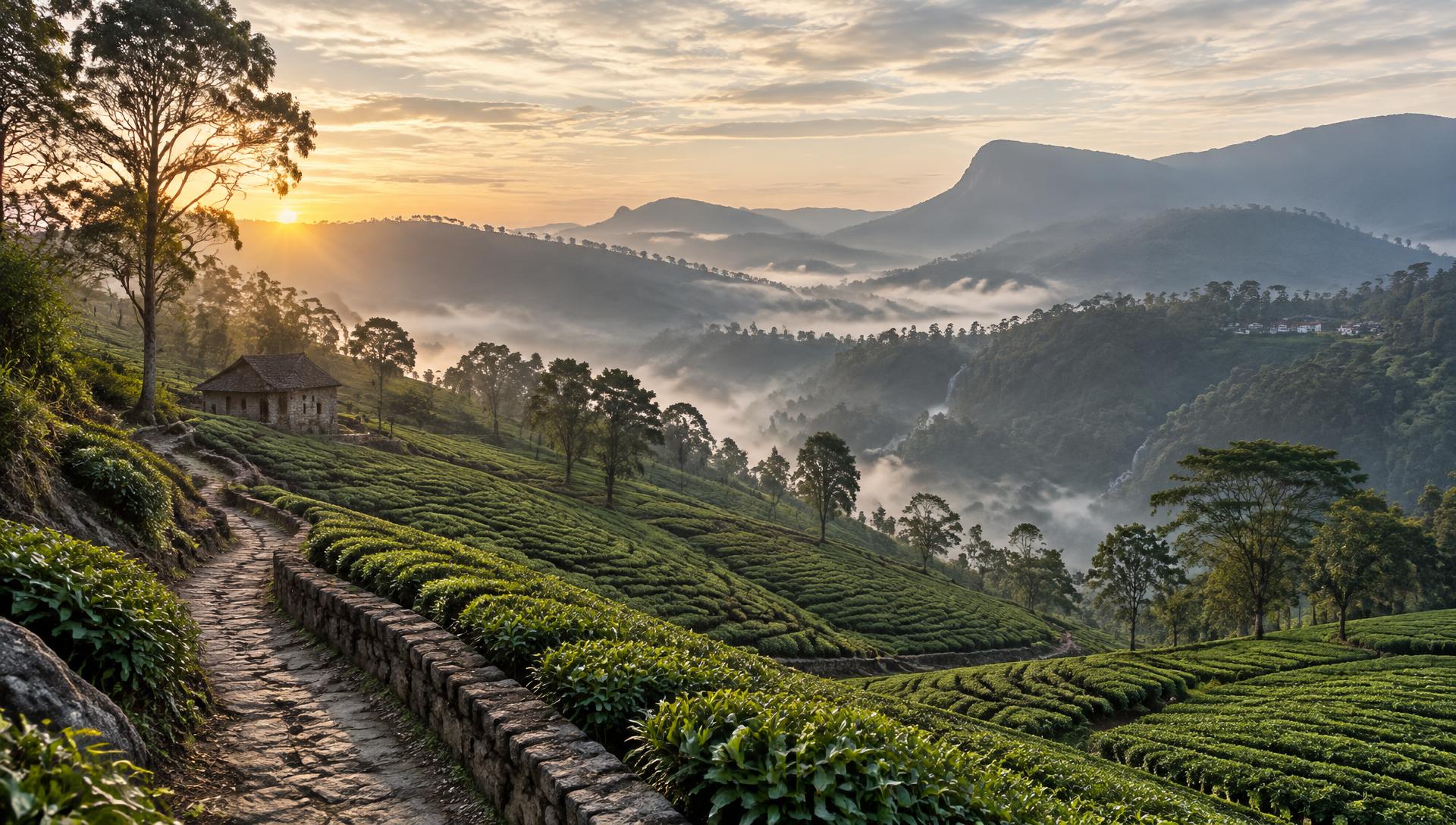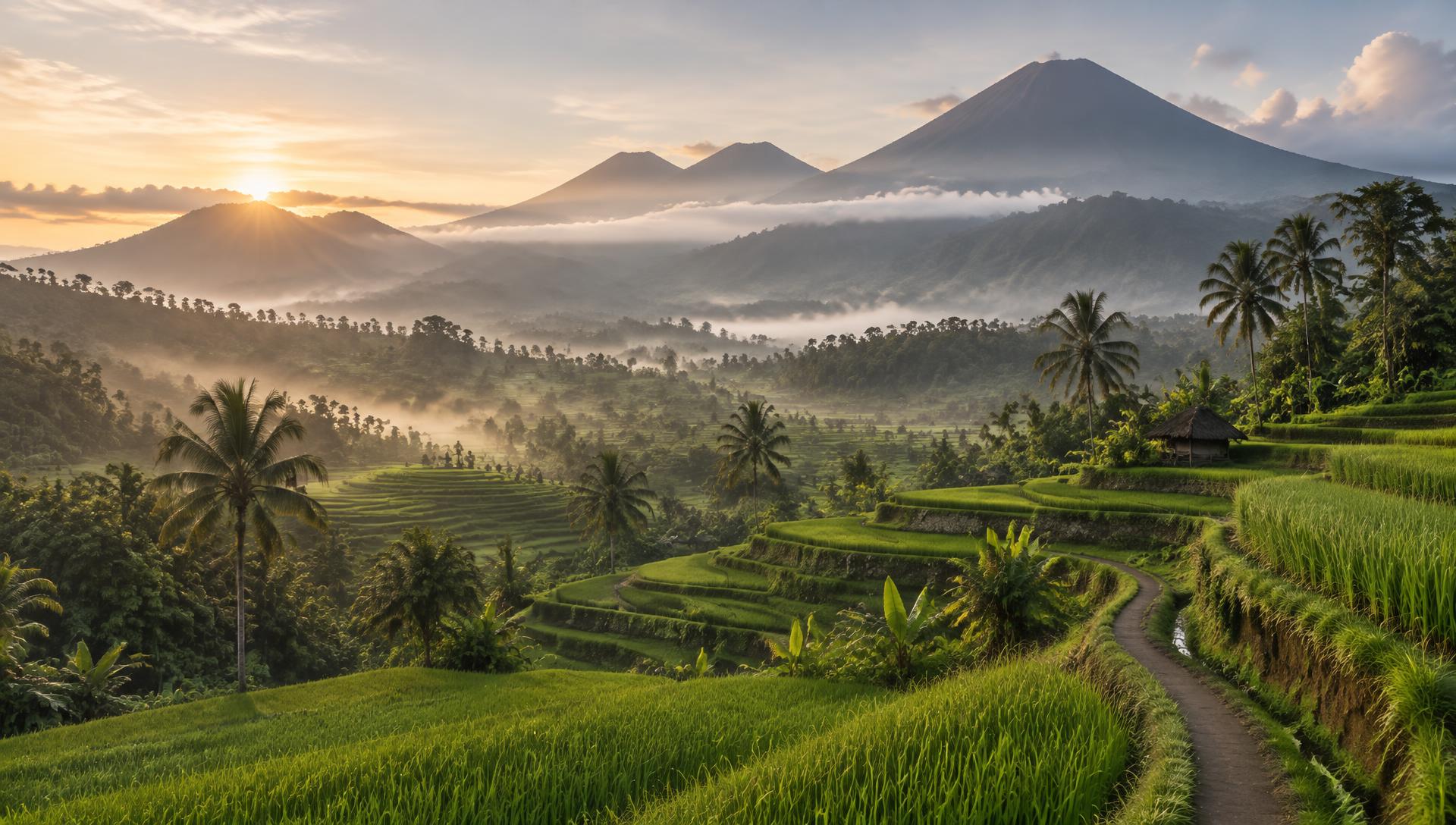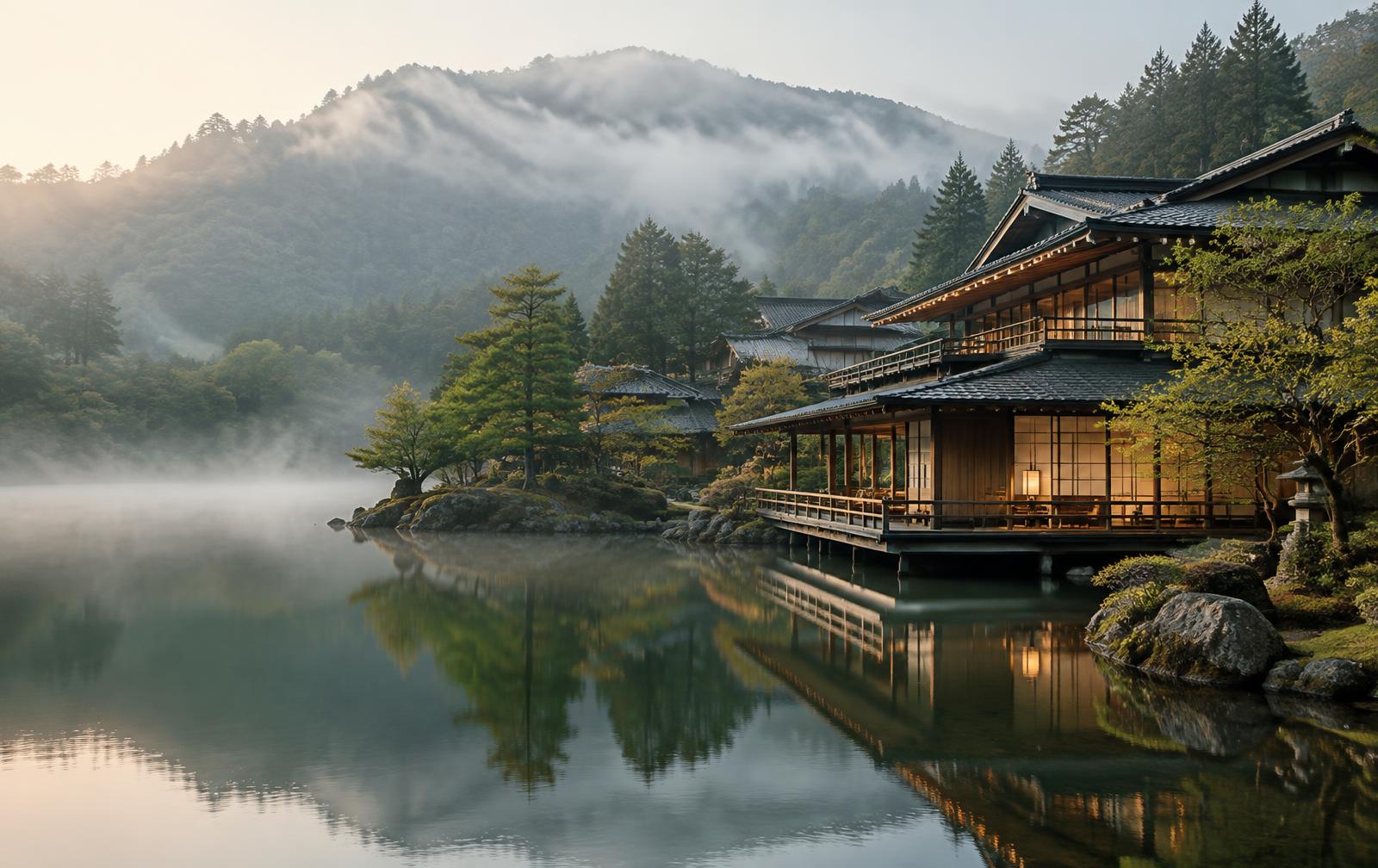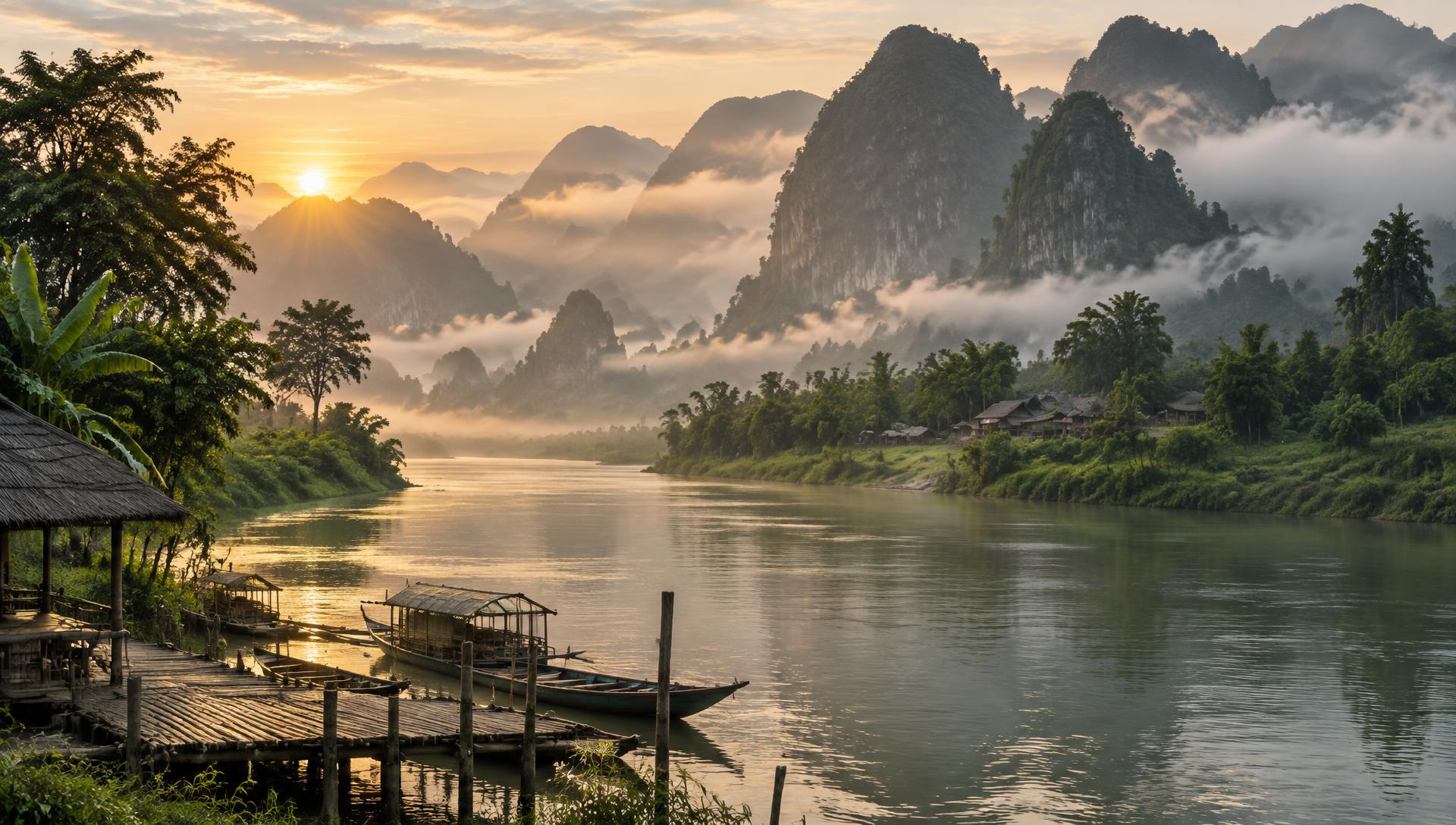
Seen from thirty thousand feet, Southeast Asia is reduced to a sequence of airport terminals; seen from the deck of a river barge or the window of a night train, it becomes a single, continuous landscape.
For travellers planning a journey focused on traveling through Southeast Asia with depth rather than haste, the mainland peninsula offers one of the world’s great overland loops. Linking northern Thailand, the upper Mekong valleys of Laos, the coastal rail spine of Vietnam, and the temple plains of Cambodia, this corridor rewards those who give it between three and six weeks. The prime dry-season window runs from November through February, when crisp morning air settles over the northern highlands at 18°C to 24°C and calm, sunlit days hovering around 28°C make river passages and cycling paths effortless.
When you trade short regional flights for wooden river boats and sleeper carriages, borders stop feeling like abrupt changes of scenery. You watch the architecture shift gradually from gilded Lanna teak roofs in Chiang Rai to French-Indochinese shutters in Luang Prabang, and you arrive in each town at the speed the place was built for.
The case for the overland thread
The temptation on a first trip to Asia is to stitch together a dozen famous names—Bangkok, Phuket, Siem Reap, Ha Long Bay, Bali—by hopping between budget airlines. Yet every flight severes the geographic thread that gives the region its meaning. It is the slow transitions between capitals—the flooded lotus fields outside Battambang, the karst valleys of Khammouane, the fishing lagoons north of Hue—that linger longest in memory.
Choosing an overland rhythm also narrows your itinerary in the healthiest way. Instead of collecting stamps, you follow watersheds and coastlines. You learn how the Mekong River binds four nations together, and why the cuisine changes subtly with every hundred kilometres of latitude.
Stage I: Down the upper Mekong into Luang Prabang
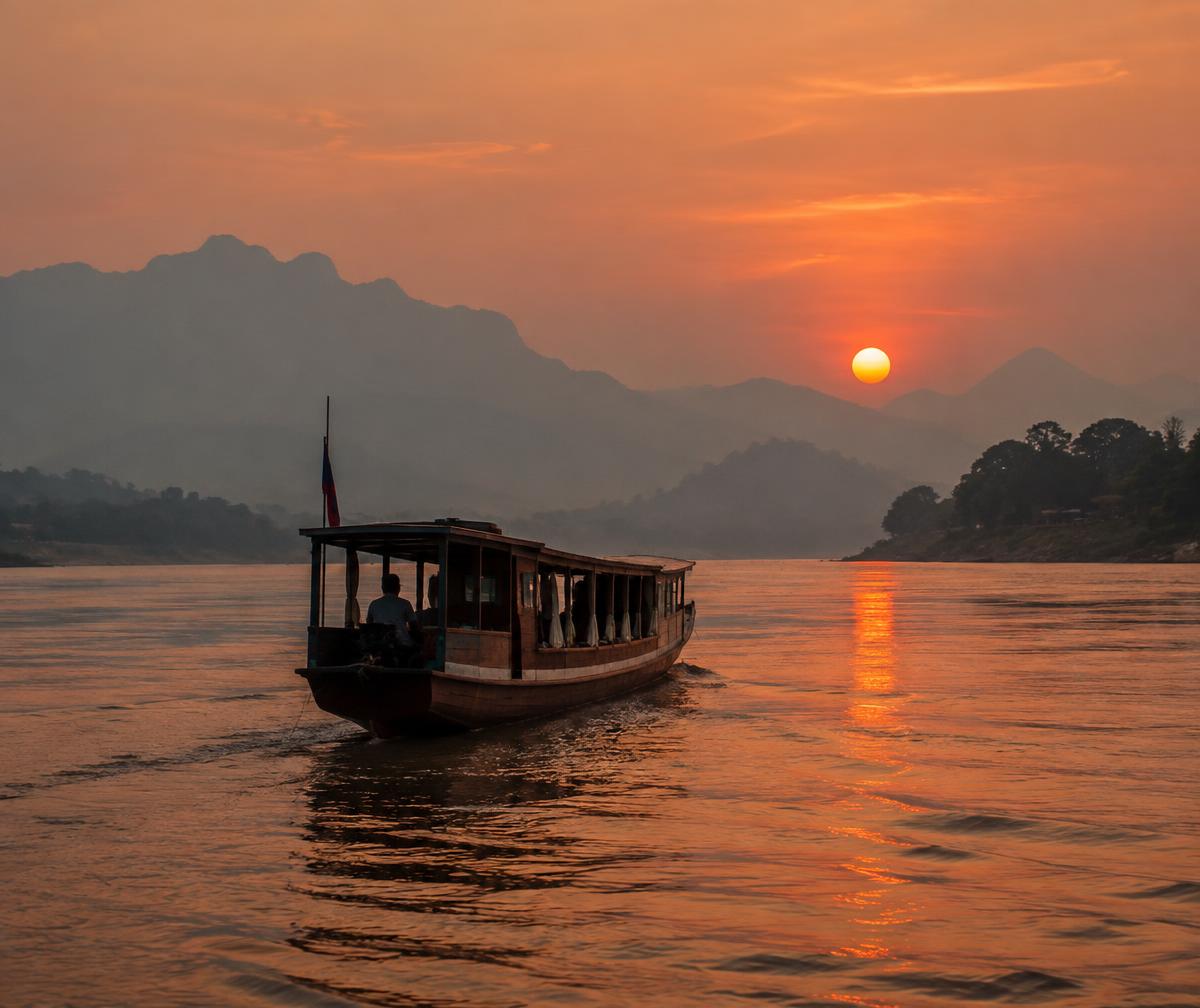
Few passages capture the spirit of slow travel in Southeast Asia better than the two-day river descent from the Thai-Lao border at Huay Xai to the old royal capital of Luang Prabang. Boarding a longtail wooden barge shortly after dawn, you leave the paved roads behind within twenty minutes. For two hundred miles, the river serves as the only highway.
Water buffalo cool themselves on sandbars beneath towering green hills. Fishermen check bamboo traps in the eddies, and narrow tributary streams empty clear mountain water into the muddy gold of the main channel. An overnight pause in the hillside hamlet of Pakbeng breaks the journey before the boat glides toward Luang Prabang late on the second afternoon, just as temple drums echo across the confluence of the Nam Khan river.
Three unhurried days in the peninsula town
Once in Luang Prabang, resist the urge to pack your schedule. Wake before sunrise to watch saffron-robed monks walk silently along Sakkaline Road during the morning alms ritual, observed respectfully from a distance. Spend the afternoon reading on a shaded veranda above the river or walking the quiet lanes behind Wat Xieng Thong, where frangipani blossoms fall onto weathered brick courtyards.
“A river journey teaches you that distance is not something to be conquered, but something to be inhabited.”
Stage II: Vietnam by coastal rail and mountain pass
Crossing east into Vietnam, the geography shifts from landlocked river valleys to a dramatic thousand-mile coastline framed by the Truong Son mountains. While domestic flights connect Hanoi and Ho Chi Minh City in two hours, the historic Reunification Express railway reveals the country’s true proportions.
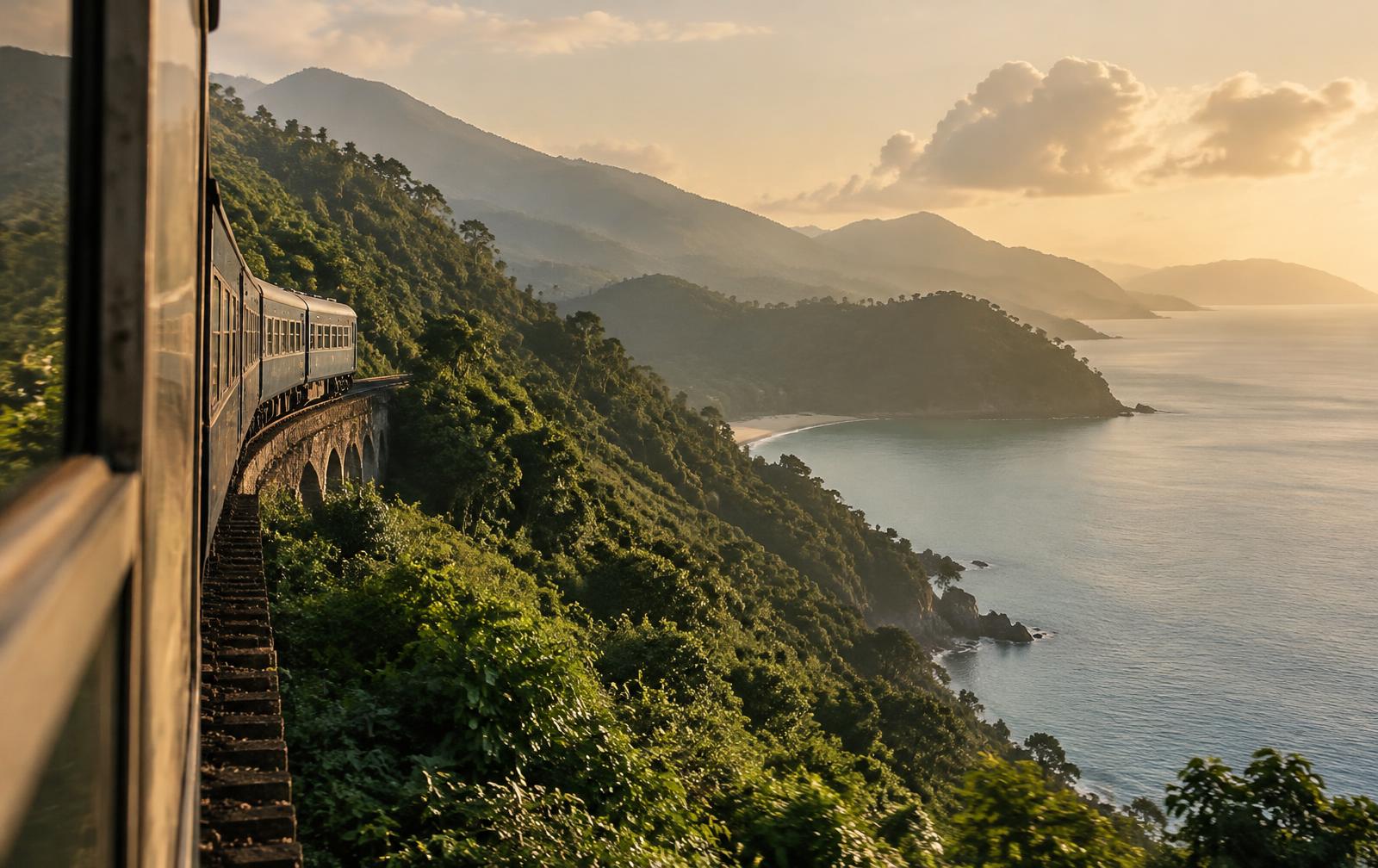
The most scenic daylight stretch climbs over the Hai Van Pass—the ‘Ocean Cloud Pass’—between the imperial citadel of Hue and the lantern-lit port of Hoi An. For three hours, the train hugs granite cliffs high above jade-green coves and empty crescents of sand, passing waterilt lagoons where wooden sampans rest at anchor.
Five classic Southeast Asia slow-travel corridors
Whether you have two weeks for a single regional thread or two months for the grand circuit, these five overland and maritime corridors offer the richest pacing across the region:
| Corridor & Route | Countries Linked | Ideal Duration | Best Seasonal Window | Signature Slow Transport |
|---|---|---|---|---|
| The Upper Mekong Passage | Northern Thailand (Chiang Rai) to Laos (Luang Prabang) | 7 – 10 days | November – February (Cool & dry, 22°C–28°C) | Two-day wooden river barge via Pakbeng & Laos–China high-speed rail link |
| The Heritage Rail Spine | Vietnam (Hanoi, Ninh Binh, Hue, Hoi An to Saigon) | 12 – 16 days | February – April (Spring sun across north & central coast) | Overnight sleeper compartments & daylight Hai Van Pass coastal train |
| The Khmer & Delta Waterway | Southern Vietnam (Can Tho, Chau Doc) to Cambodia (Phnom Penh & Siem Reap) | 8 – 12 days | December – March (Dry skies & calm river crossings) | Mekong river boat across the Vinh Xuong border & overland road to Angkor |
| The Northern Cloud Loop | Northern Vietnam (Ha Giang, Cao Bang & Ba Be Lake) | 6 – 8 days | September – November (Golden rice harvest & crisp air) | Private vintage jeep or guided mountain road touring through karst valleys |
| The Andaman & Peninsula Thread | Bangkok, Khao Sok National Park, Krabi & Penang (Malaysia) | 10 – 14 days | December – April (Calm turquoise seas on the west coast) | Southern sleeper train from Bangkok to Surat Thani & wooden longtail boats |
Stage III: Across the Tonlé Sap plain to Angkor and Bangkok
From the waterways of Vietnam’s Mekong Delta, river boats ascend the main channel from Chau Doc across the Cambodian frontier to Phnom Penh. From there, traveling overland along the northern shore of the Tonlé Sap lake brings you into Siem Reap with a sense of how the ancient Khmer Empire fed its cities through vast hydraulic reservoirs.
Give the temples of Angkor at least three mornings. Rather than racing between the main towers at midday, walk the shaded forest causeways of Preah Khan and Ta Som shortly after dawn, when gibbons call from the canopy and the sandstone bas-reliefs are cool to the touch. From Siem Reap, a quiet four-hour road and rail transfer west through Battambang reconnects smoothly with Bangkok.
Seasons, border crossings, and when to go
The secret to a seamless multi-country route is aligning your compass with the monsoon. Between November and February, the entire mainland arc from Chiang Mai to Angkor enjoys its coolest, driest skies. If you travel in March or April, when northern valleys grow warm and hazy, shift your route toward central Vietnam’s coast and the southern islands of Thailand. And if you arrive between May and September during the green monsoon, let the afternoon rains set a slower tempo: morning temple walks, long lunches under deep verandas, and the quiet pleasure of watching tropical storms roll across emerald rice plains.
Practical Notes
Questions travellers often ask
What is the best time of year for traveling through Southeast Asia?
For a continuous overland journey across mainland Southeast Asia—covering northern Thailand, Laos, Vietnam, and Cambodia—the most comfortable window runs from November through February. During these cool, dry northeast monsoon months, daytime temperatures average 24°C to 29°C, humidity stays low, and mountain roads in Laos and northern Vietnam remain clear of heavy rains.
How many weeks do you need to travel through Southeast Asia without rushing?
To experience mainland Southeast Asia at an unhurried pace without relying on short-haul flights every three days, plan for at least three to four weeks for two countries (such as Thailand and Laos, or Vietnam and Cambodia), and six to eight weeks for the complete Indochina loop connecting Bangkok, Chiang Rai, Luang Prabang, Hanoi, Hoi An, Siem Reap, and the southern islands.
What is the best overland route through Thailand, Laos, Vietnam, and Cambodia?
The classic continuous overland arc begins in Bangkok, travels north by sleeper train to Chiang Mai and Chiang Khong, crosses the Mekong into Laos for the two-day slow boat to Luang Prabang, continues through Hanoi and down Vietnam's coast via the Reunification Express train to Ho Chi Minh City, follows the Mekong Delta upriver to Phnom Penh and Siem Reap in Cambodia, and returns by rail from the Thai border at Aranyaprathet to Bangkok.
Can you still travel down the Mekong River by slow boat into Luang Prabang?
Yes. Both public wooden river barges and boutique two-day cruise boats still ply the upper Mekong between Huay Xai (on the Thai-Lao border) and Luang Prabang, stopping overnight in the riverside village of Pakbeng. The two-day passage covers roughly 300 kilometres of roadless jungle gorges, remote Khmu and Hmong villages, and limestone cliffs.
What visas are required for a multi-country Southeast Asia journey in 2026?
Most Western, UK, European, and Australian passport holders receive a 60-day visa-free entry into Thailand and can apply online for Vietnam's 90-day single- or multiple-entry e-Visa prior to departure. Both Laos (Lao e-Visa) and Cambodia (Cambodia e-Visa) issue straightforward electronic visas valid for 30 days across major international airports and designated overland border posts.
How do you avoid travel fatigue on a multi-week Southeast Asia itinerary?
Follow a three-night minimum rule at every stop, alternate long transit days with quiet riverside or highland towns rather than moving strictly from capital to capital, and use overnight sleeper trains (such as Bangkok to Chiang Mai or Hanoi to Da Nang) so the journey itself serves as both transport and rest.
Share this story