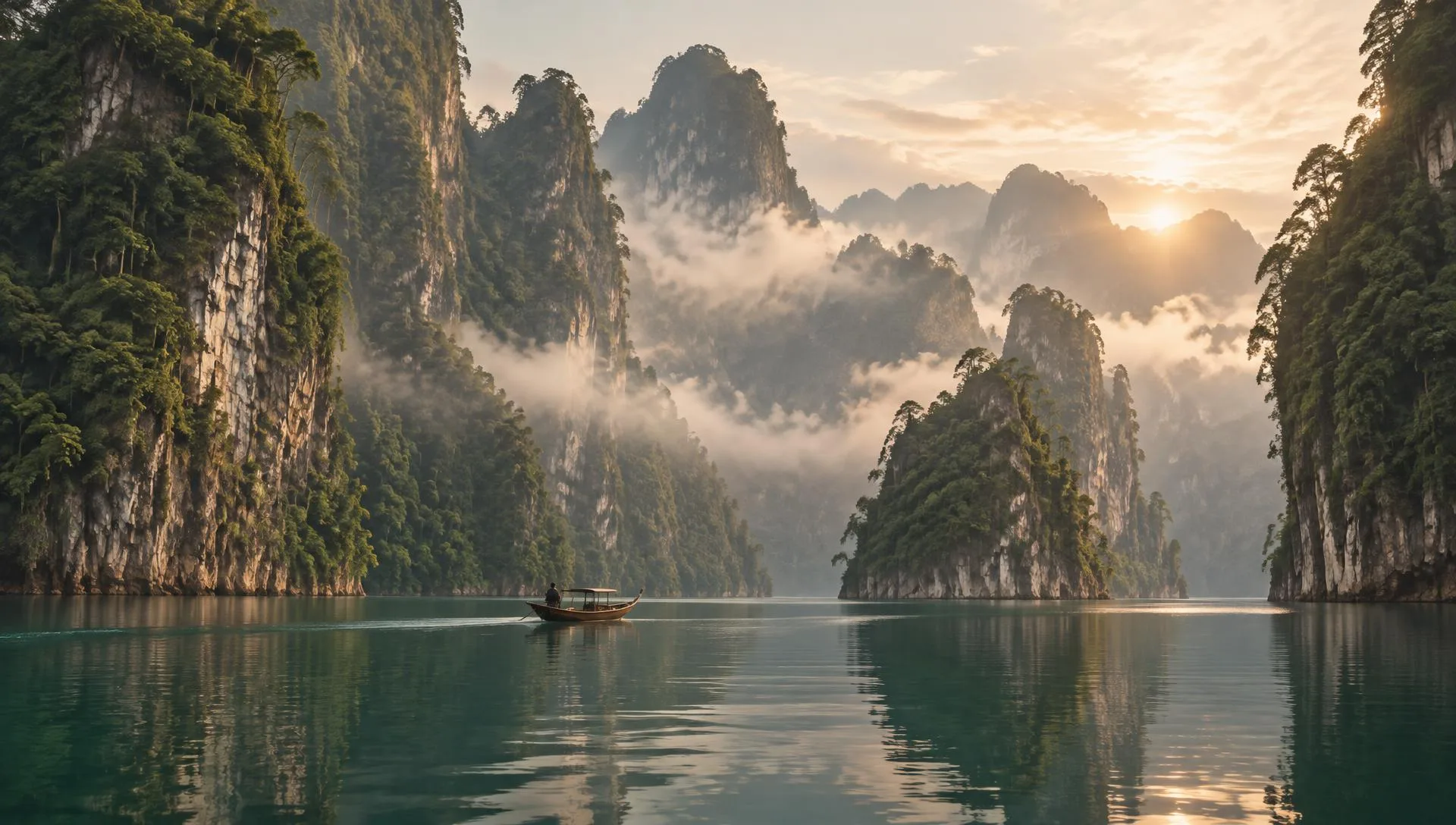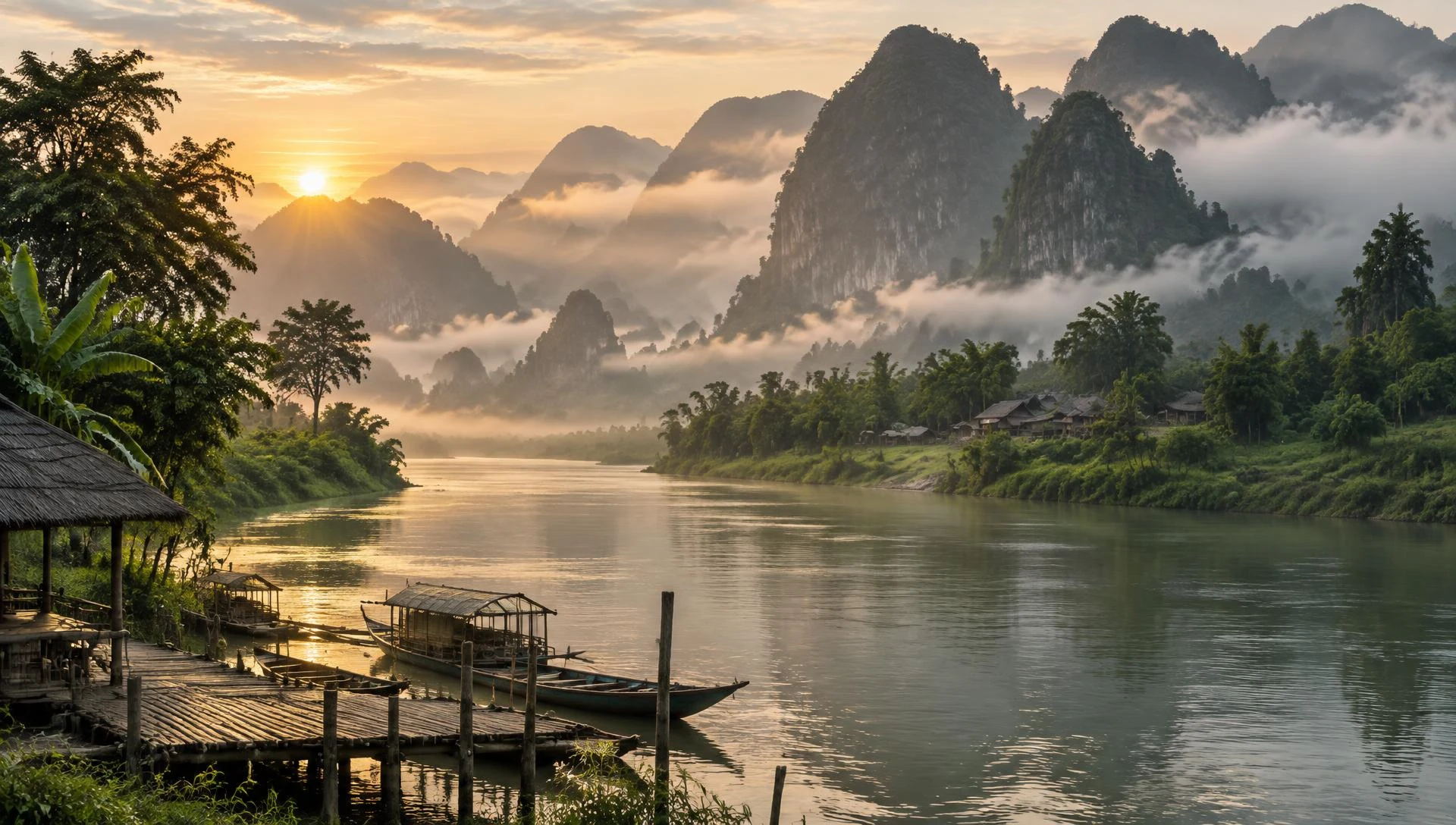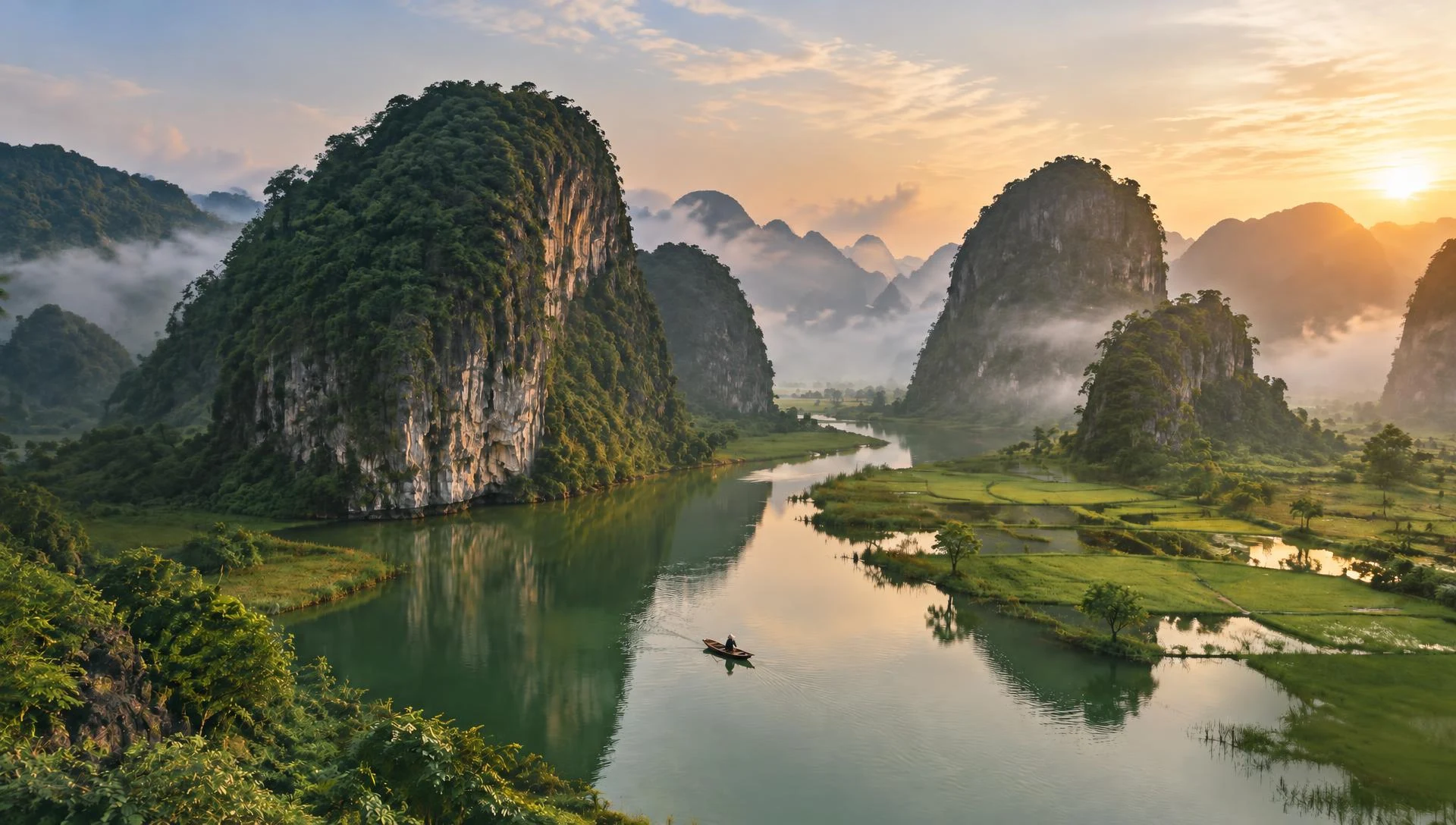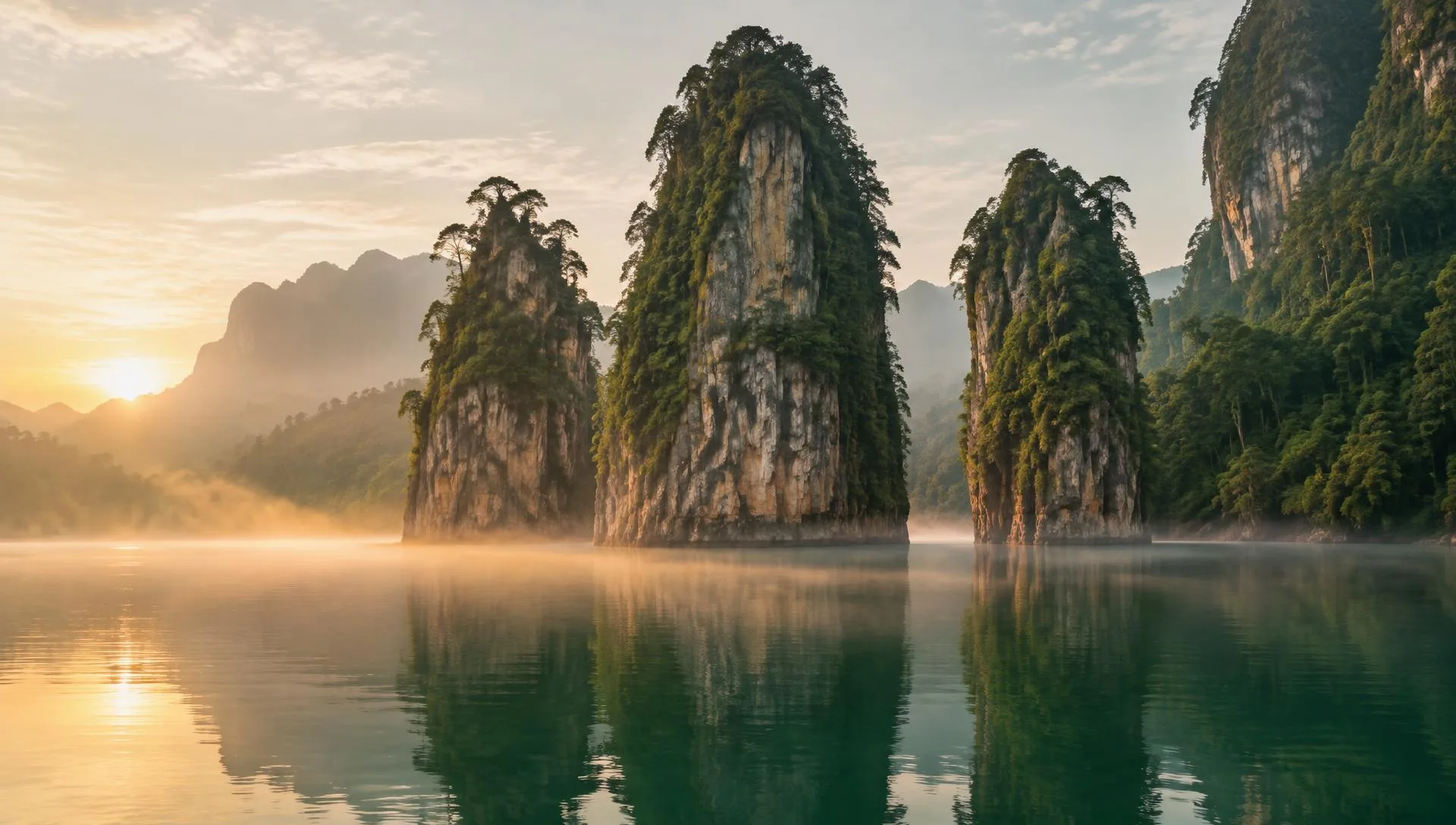
Long before the islands of the Andaman Sea and the Gulf of Thailand rose into view of modern travellers, the spine of the southern peninsula belonged to a single primeval forest—an inland sea of vertical limestone and mist older than the Amazon.
Spanning more than seven hundred square kilometres of protected rainforest in Surat Thani province, Khao Sok National Park is the wild geographical hinge of southern Thailand. While millions of visitors fly straight over its canopy on their way to beach resorts, those who pause here discover two landscapes that feel worlds apart: a western river valley where clear mountain streams wind beneath giant buttress-rooted trees, and the eastern expanse of Cheow Lan Lake, where a hundred limestone karst peaks rise nearly a thousand metres out of emerald water. As we noted in our broader guide to the best places to visit in Thailand, giving Khao Sok three or four unhurried days transforms a coastal holiday into a genuine overland journey.
Because the park lacks through-roads across its flooded interior, movement here still relies on wooden longtail boats, bamboo rafts, and forest footpaths—imposing a natural stillness the moment you leave the highway behind.
Two worlds: The Sok River valley and Cheow Lan Lake
The single most important detail to understand when planning a trip to Khao Sok Thailand national park is that the park has two separate gateways located an hour’s drive apart along Route 401. First-time visitors often book a hotel near one entrance assuming they will wake up looking at the famous lake, only to discover they are sixty-five kilometres away in the western forest valley.
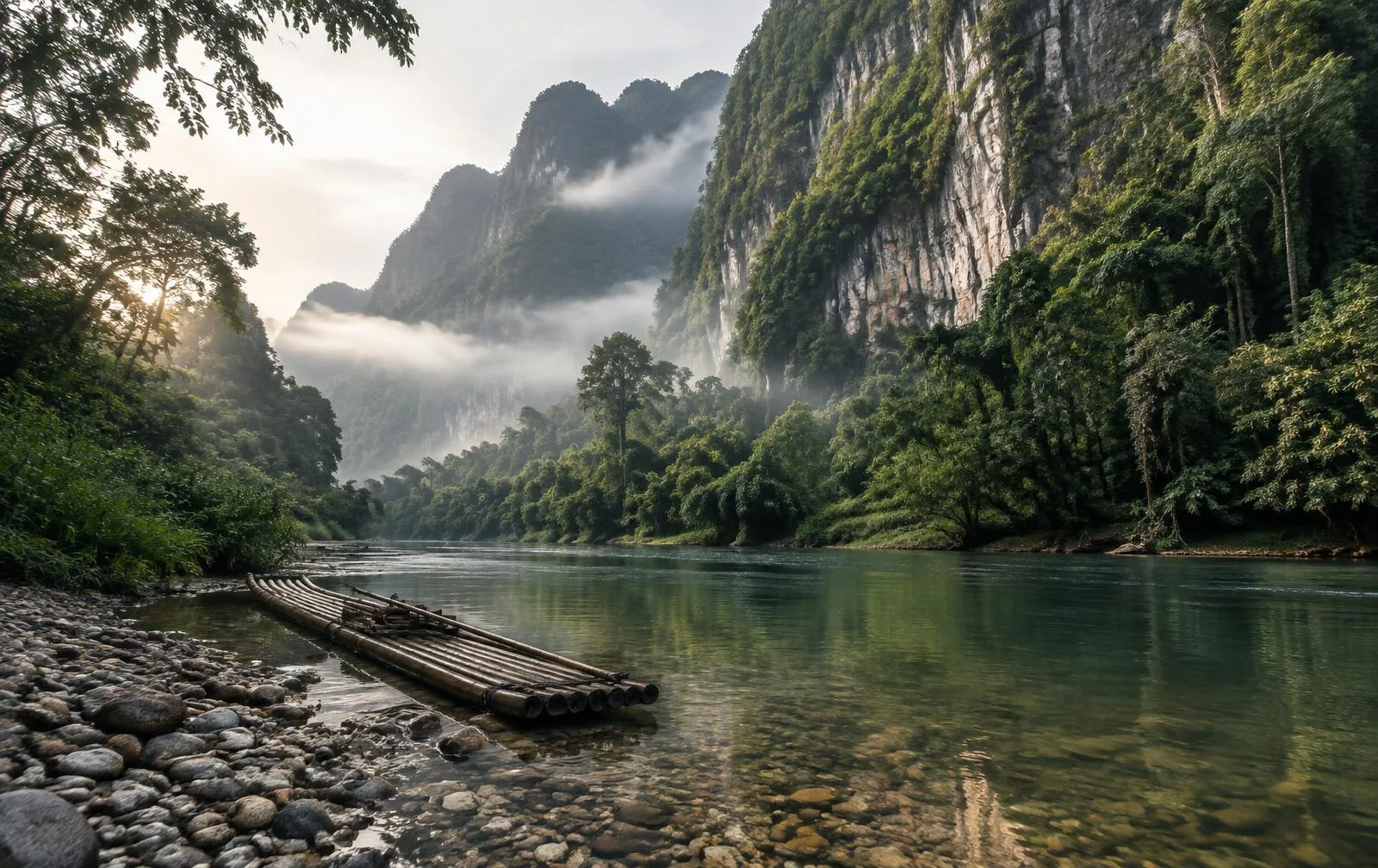
Both sides deserve your time, and each serves a different rhythm. The western entrance at Khlong Sok village sits in a fertile lowland basin framed by sheer stone cliffs and ribbon waterfalls. Here you sleep in timber treehouses or riverside cottages listening to tree frogs and the rush of the Sok River, step directly onto shaded botanical trails from the park headquarters, and drift downstream on hand-polled bamboo rafts where kingfishers dart across gravel shallows. Sixty-five kilometres east at Ratchaprapha Marina begins the maritime half of the park: Cheow Lan Lake, accessible solely by longtail boat.
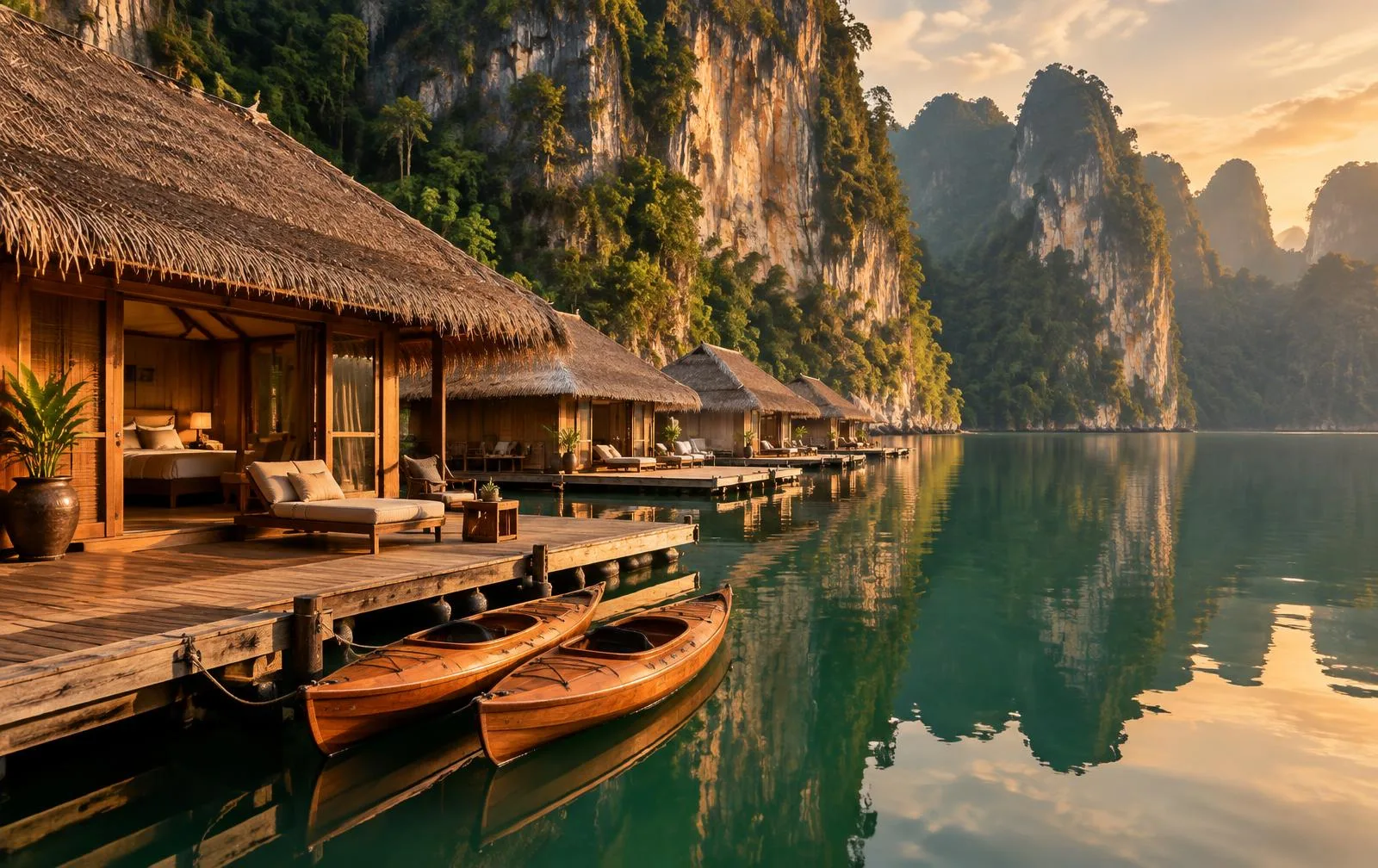
Cheow Lan Lake: Floating raft houses and flooded karst canyons
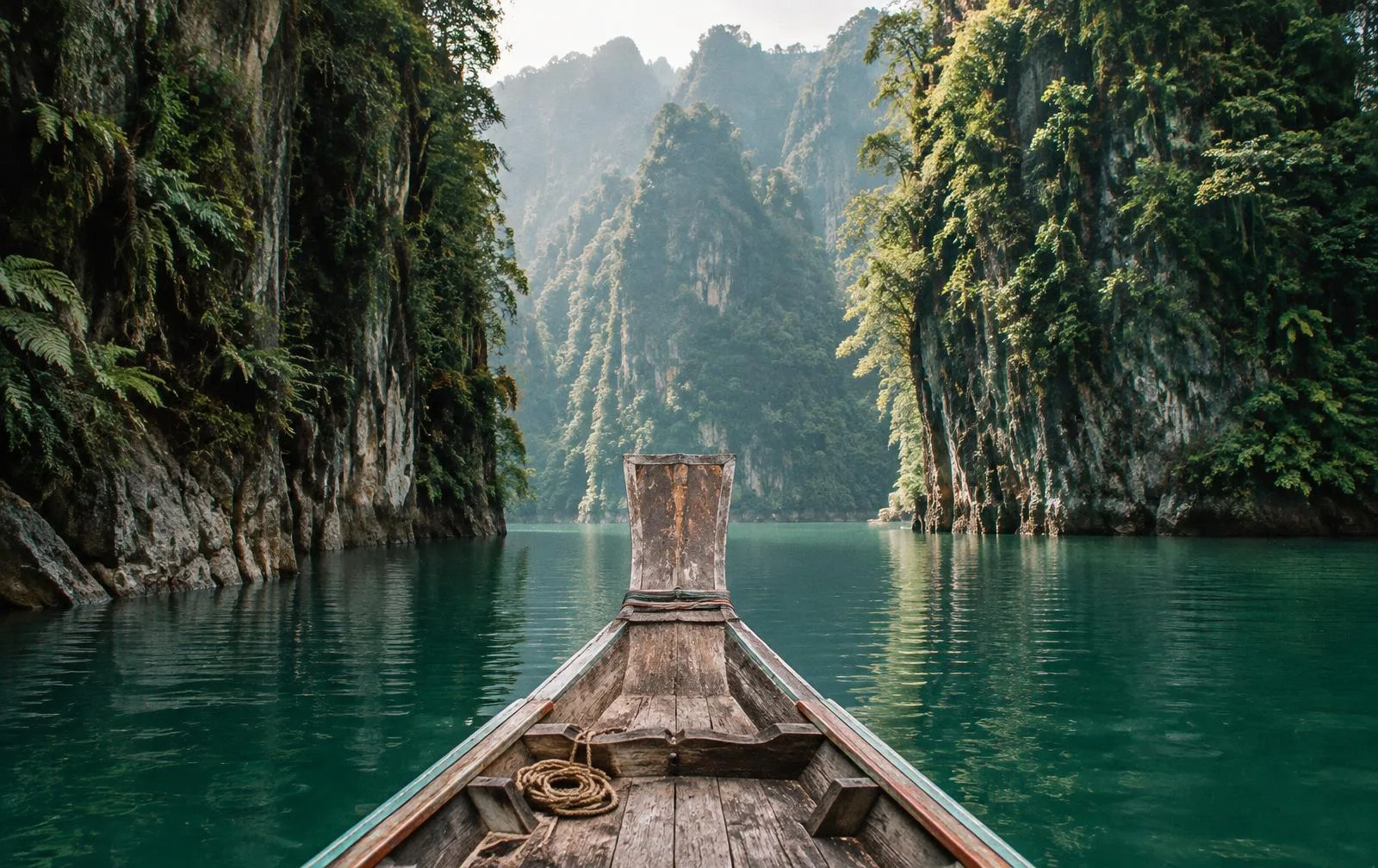
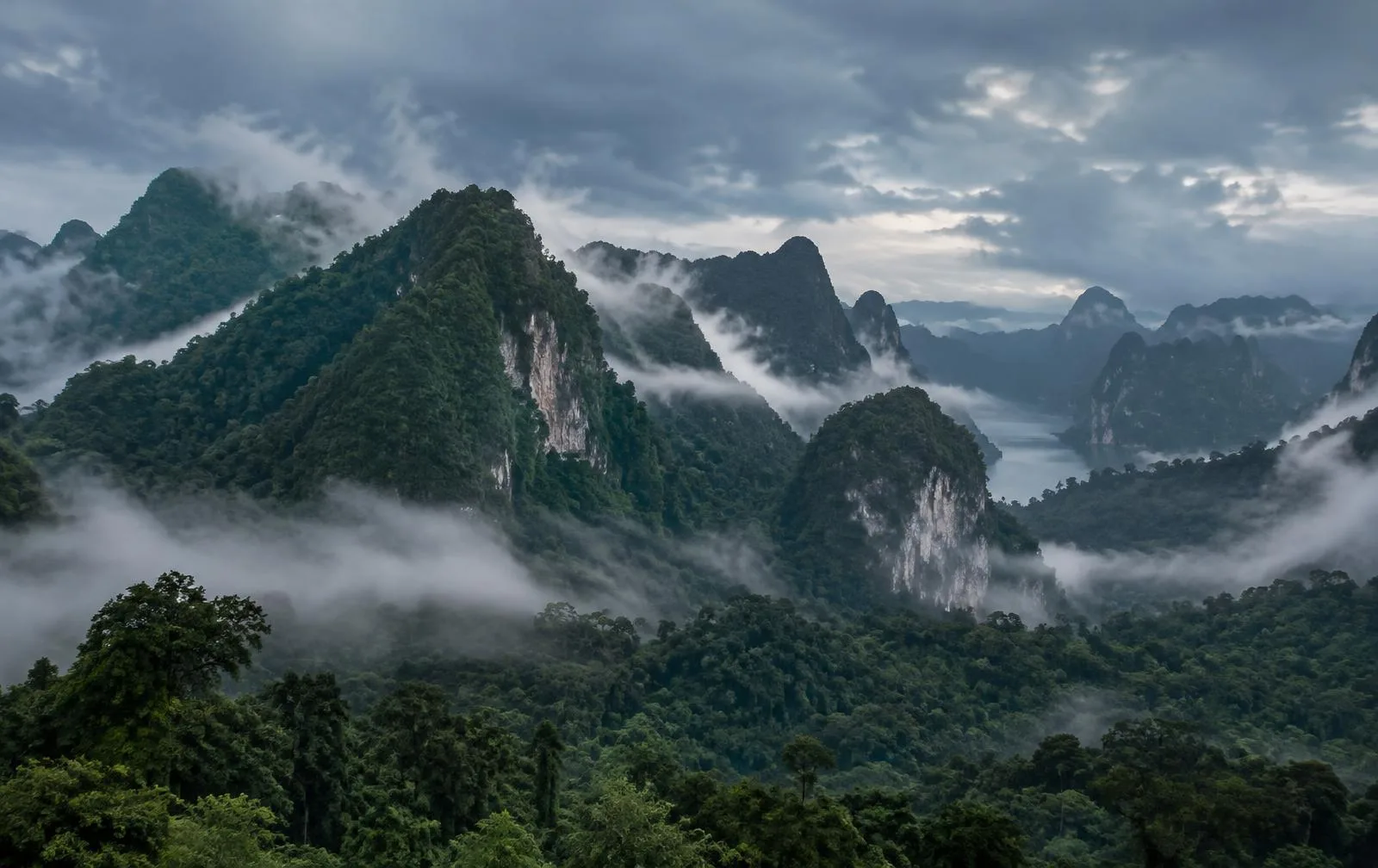
Created in 1982 when the Ratchaprapha Dam impounded the Khlong Saeng River, Cheow Lan Lake flooded a vast basin of karst valleys, turning mountain summits into a labyrinth of more than a hundred jagged islands. Visually, the lake recalls Vietnam’s Ninh Binh and Lan Ha Bay, yet here the water is warm, mineral-rich freshwater surrounded by unbroken tropical jungle.
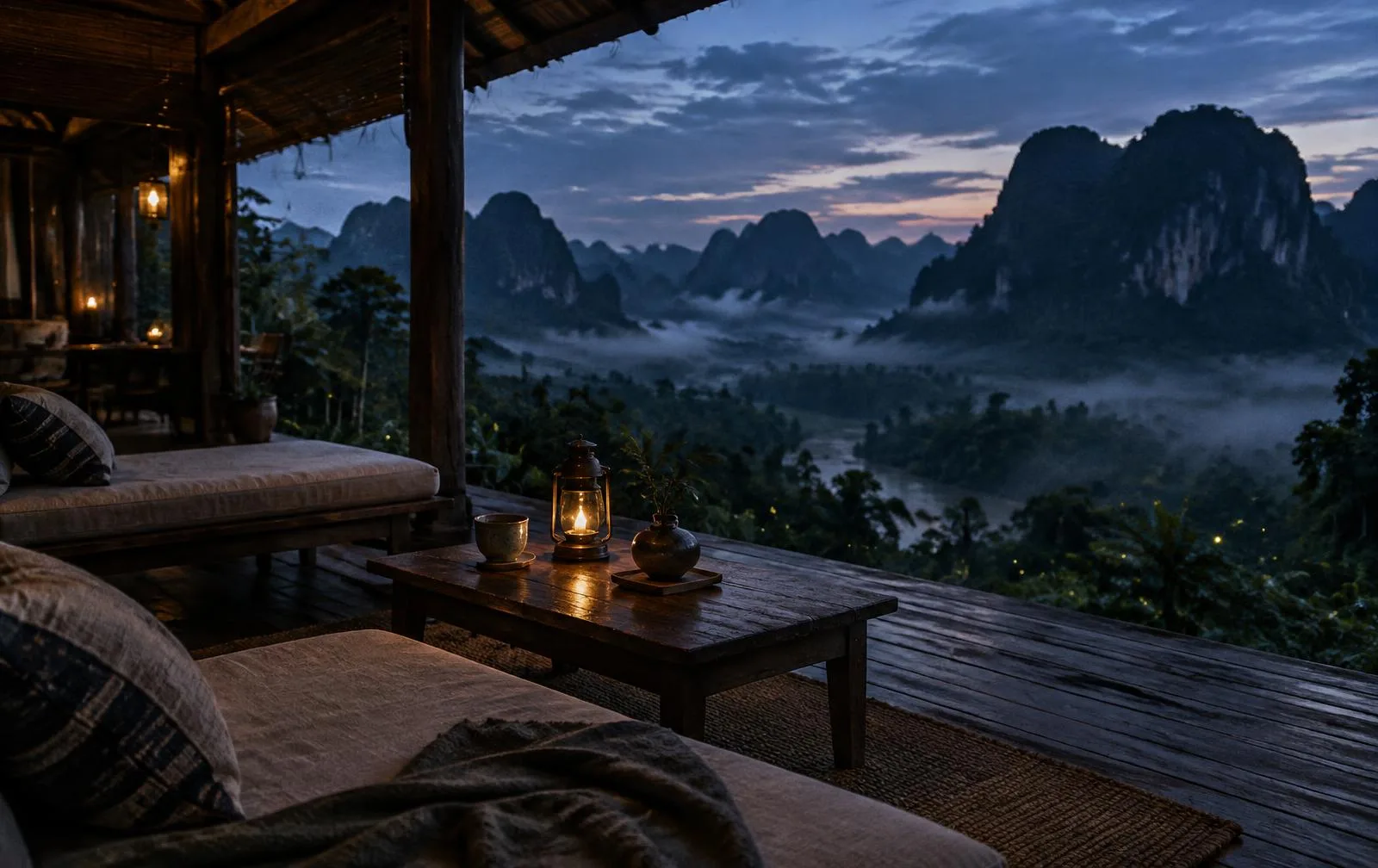
Do not visit Cheow Lan Lake merely on a midday boat excursion. At noon, day-trip boats cluster near the central viewpoints and the sunlight flattens the water. Instead, pack a small overnight bag and take a wooden longtail boat forty-five minutes deep into the western arms of the reservoir to stay in a floating raft house. By four in the afternoon, every day boat returns to the pier. You are left in a silent amphitheatre of stone and water where you can slip off your teak veranda for a twilight swim in twenty-eight-degree water and watch mist rise from the treetops beneath a canopy of stars undimmed by artificial light.
Dawn gibbons, great hornbills, and a 160-million-year-old canopy
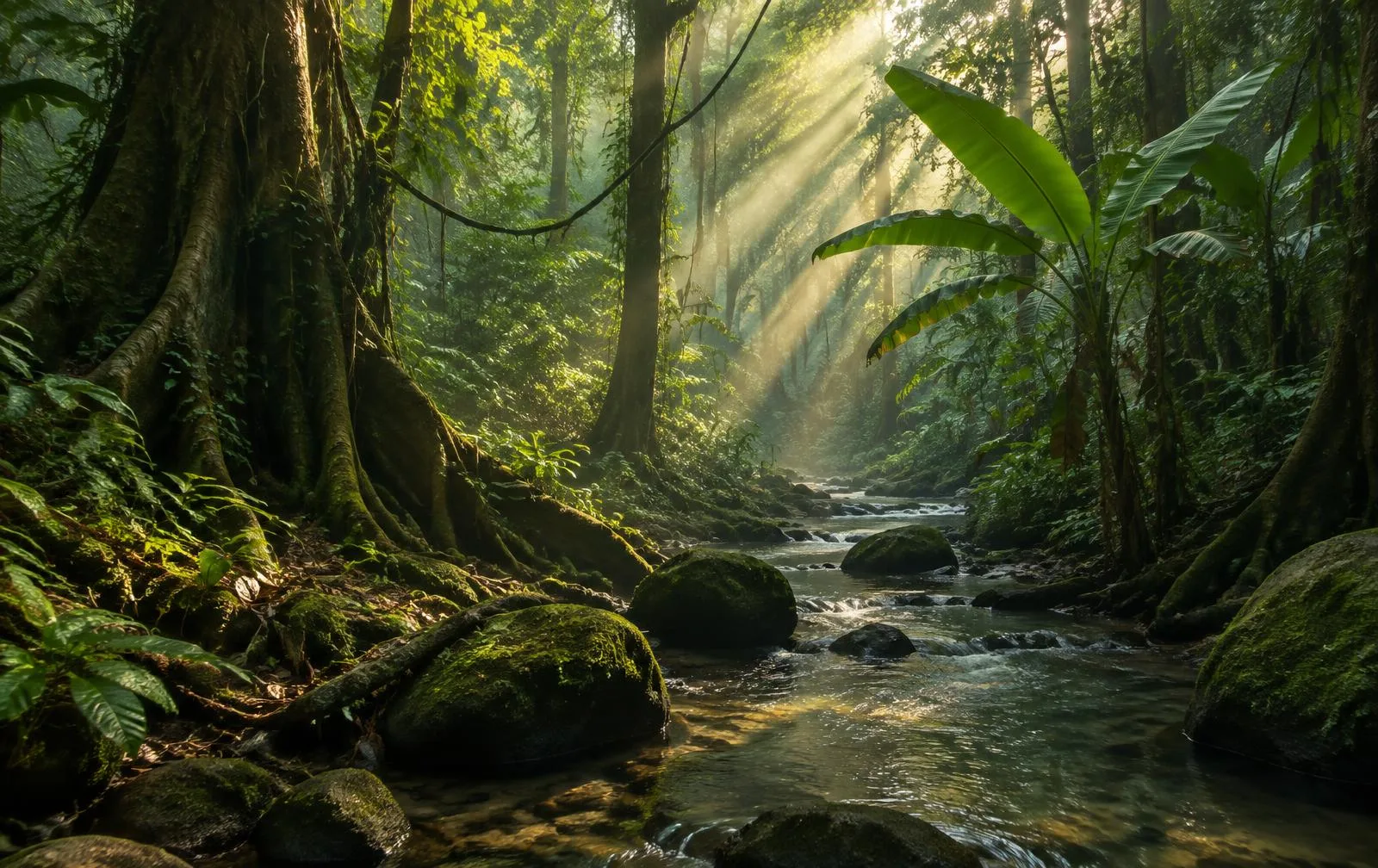
During the Pleistocene ice ages, when much of the northern hemisphere lay beneath glaciers and large parts of equatorial Africa and South America dried into savanna, the Kra Isthmus of southern Thailand remained warm and wet, buffered by two oceans. As a result, the evergreen dipterocarp forest of park Khao Sok has grown uninterrupted for roughly 160 million years.
You feel that antiquity most acutely at six in the morning. Before sunrise, as your boatman cuts the engine in a narrow flooded gorge bordering the Khlong Saeng Wildlife Sanctuary, the forest wakes with the haunting, territorial whoops of white-handed gibbons echoing from ridge to ridge. Look up into the crown of a towering Yang tree and you will spot pairs of great hornbills taking flight with a deep, rhythmic whoosh of wings that sounds like a steam locomotive in the quiet air, while troops of spectacled dusky langurs leap through the bamboo along the water’s edge.
“In Khao Sok, the limestone mountains are so steep that the clouds do not pass over them; they thread their way slowly through the trees.”
Field ledger: Comparing Khao Sok’s zones, stays, and seasons
Use this planning ledger to divide your nights between the western rainforest valley and the eastern lake sanctuaries according to the season:
| Park Zone & Gateway | Primary Base & Access | Signature Slow Experiences | Recommended Nights | Best Seasonal Window |
|---|---|---|---|---|
| Western Rainforest Valley | Khlong Sok Village (Route 401 West Gate) | Footpaths to Bang Hua Rat, Sok River bamboo rafting & night forest walks | 2 nights | December – April (Dry trails & Rafflesia blooms in Jan–Mar) |
| Central Cheow Lan Lake | Ratchaprapha Pier (15–30 min by longtail boat) | Khao Sam Kler (Three Brothers) karsts & quiet cove kayaking | 1 – 2 nights | November – May (Glass-calm emerald water & crisp dawns) |
| Remote Western Lake Arms | Upper Cheow Lan & Khlong Saeng Border (45–60 min boat) | Dawn gibbon & hornbill boat safaris, off-grid floating lodges | 2 nights | December – April for wildlife along the water’s edge |
| Highland Viewpoints & Passes | Khao Sok Viewpoint & Phanom Karst Corridor | Dawn valley cloud inversions & botanical orchid trails | En-route morning stop | May – November (Green monsoon mist & dramatic cloudscapes) |
| Surrounding River Valleys | Takua Pa & Little Amazon Banyan Canals (West approach) | Canoeing through ancient banyan creeks & local spice orchards | Half-day pairing on transfer to Andaman coast | Year-round (Morning departures before 9:00 AM) |
When to visit: Dry trails, the green monsoon, and the Rafflesia bloom
Because Khao Sok straddles the central mountains of the southern peninsula, it receives rain from both the southwest Andaman monsoon (May to October) and the early northeast Gulf winds (November). The driest, most predictable months run from late December through April. During this window, leeches disappear from the forest floor, the water in Cheow Lan Lake settles into a deep jade mirror, and between January and March the colossal five-petalled buds of Rafflesia kerrii—locally called Bua Phut, measuring up to eighty centimetres across—open high on the forested ridges above Khlong Sok.
Yet slow travellers should never dismiss the green months from May to September. Rain in Khao Sok rarely falls as a grey, all-day drizzle; instead, a warm afternoon cloudburst sweeps across the valley for an hour, releasing the scent of wet limestone and wild ginger before massive ribbons of white vapour rise vertically out of the canopy. Note only that certain subterranean limestone caves around the lake close for safety between June and November when water levels are high, while surface boat safaris and ridge walks remain deeply rewarding.
Connecting Khao Sok between the Andaman coast and the Gulf islands
One of Khao Sok’s greatest gifts to itinerary planning is its location. Situated directly along the east–west highway connecting Surat Thani with Takua Pa, the park turns what would otherwise be a forgettable transit day between Thailand’s two coastlines into the highlight of a trip. If you are traveling through Southeast Asia by rail, you can board the evening sleeper train in Bangkok, step off at Surat Thani station at dawn, and be sipping coffee at Ratchaprapha Pier an hour later.
From the western valley of Khlong Sok, a scenic two-hour drive west brings you directly to the quiet casuarina beaches of Khao Lak and northern Phuket, or two-and-a-half hours south to the boats for Koh Yao Noi and Krabi. Heading east from Cheow Lan Lake, ninety minutes by road delivers you to Donsak Pier for the ferry across to Koh Samui and the sheltered summer coves of northern Koh Phangan—allowing you to move seamlessly from ancient mountain forest to coral reef in a single morning.
Practical Notes
Questions travellers often ask
What is the difference between Khao Sok village and Cheow Lan Lake?
Khao Sok National Park is divided into two distinct experiences separated by sixty-five kilometres of road. The western entrance at Khlong Sok village sits in a lush river valley ideal for jungle trekking, night wildlife walks, bamboo rafting down the Sok River, and staying in boutique treehouses. The eastern entrance at Ratchaprapha Marina is the boat pier for Cheow Lan Lake, where visitors board longtail boats to stay in floating raft bungalows surrounded by towering limestone karsts.
How many days do you need in Khao Sok National Park, Thailand?
Give Khao Sok at least three days and two nights, and ideally four days and three nights. Spending two nights in the western Khlong Sok rainforest valley followed by one or two nights on a floating raft house on Cheow Lan Lake lets you experience both the terrestrial jungle trails and the remote northern arms of the lake without rushing back to a pier by mid-afternoon.
When is the best time of year to visit Khao Sok National Park?
The dry season from December through April offers the sunniest skies, calmest lake crossings, and driest forest trails, with daytime temperatures averaging 28°C to 32°C and cool 20°C nights. Between January and March, the rare giant Rafflesia kerrii flower blooms on the forest slopes. However, the green monsoon from May to October brings dramatic mountain mist, full waterfalls, and far fewer day-trip boats on Cheow Lan Lake.
Are there luxury floating bungalows on Cheow Lan Lake?
Yes. Floating accommodation on Cheow Lan Lake ranges from simple National Park ranger rafts to refined eco-luxury sanctuaries such as 500 Rai Floating Resort and Panvaree The Greenery, which offer private teak decks, en-suite bathrooms, kayaks tied directly to your veranda, and solar- or generator-supported air conditioning during evening hours.
What wildlife can you realistically see in Khao Sok National Park?
Early morning longtail boat safaris along the quiet coves of Cheow Lan Lake and Khlong Saeng Wildlife Sanctuary frequently spot white-handed gibbons, dusky langurs (spectacled leaf monkeys), macaques, great hornbills, wreathed hornbills, and ospreys. With patience and a local ranger, fortunate visitors occasionally glimpse wild Asian elephants, Malayan tapirs, or gaur (wild bison) feeding along the muddy banks at dawn or dusk.
How do you get to Khao Sok from Phuket, Krabi, or Koh Samui?
Khao Sok sits directly between Thailand's two southern coastlines in Surat Thani province. By private car, the western park headquarters is 2.5 to 3 hours north of Phuket Airport or Khao Lak, and 2.5 hours from Krabi. From the east, Ratchaprapha Pier on Cheow Lan Lake is 1 hour west of Surat Thani Airport and train station, and 1.5 hours from Donsak Ferry Pier serving Koh Samui and Koh Phangan.
Share this story